

For SaaS and subscription businesses, customer retention is crucial for generating revenue.
Customer Success teams face increasing pressure to minimize churn, secure renewals, and transform satisfied customers into opportunities for expansion, all while managing a growing portfolio of clients. Salesforce's customer success automation provides these teams with real-time insights into health scores, usage trends, and renewal risks.
However, having visibility into data alone is not enough to prevent churn. When Salesforce signals prompt personalized gifting through Reachdesk's Revenue Enablement Platform, Customer Success teams can take automatic action based on those signals, effectively turning lagging indicators into proactive measures for protecting the pipeline.
How Salesforce-triggered gifting reduces SaaS churn and improves renewal rates
When Salesforce and a gifting platform like Reachdesk work together, you can get:
- 61% of customers feel more positive about a brand after receiving a gift
- 70% feel more valued
- Executive engagement campaigns achieve redemption rates above 49%
- Gifting initiatives generate expansion opportunities
Unlike reactive support, gifting powered by platforms like Reachdesk:
- Reinforces milestones
- Strengthens executive relationships
- Encourages feature adoption
- Re-engages at risk accounts early
Because gifting is triggered by Salesforce data, retention becomes systematic rather than reactive.
How to set up Salesforce customer success automation: Triggers, fields, and workflows
Effective customer success automation in Salesforce is built on three foundational layers: the right data fields, meaningful threshold logic, and workflows that fire at the correct moment. We break this down into more detail below.
Health score fields and thresholds
Salesforce does not ship with a native health score out of the box, but it can be constructed using formula fields or custom scoring objects that aggregate key signals: product login frequency, feature adoption rate, support ticket volume, and contract utilization. Most CS teams apply a traffic-light model, green (score 75 and above), amber (50 to 74), and red (below 50), with automated workflow rules that trigger different playbooks depending on which band an account falls into.
The threshold you set for "at risk" will depend on your product and average contract value, but the important principle is that the trigger should fire early enough to give your team a meaningful intervention window, typically 90 days before a risk escalates.
Renewal date and opportunity field triggers
Salesforce Opportunity fields are the most reliable anchor for renewal automation. Setting up a "Renewal Date" field on the Account or Opportunity object allows you to build time-based workflow rules: for example, a rule that fires when Renewal Date equals "Today plus 180 days" can automatically create a CS task, enqueue an email alert, or, when integrated with a platform like Reachdesk, trigger an executive gifting campaign.
Combining renewal proximity with health score gives you a compound trigger. Accounts that are both approaching renewal and showing amber or red health scores become your highest-priority intervention queue.
Automation rule types to use
Salesforce offers several automation layers that CS teams can stack together. Process Builder and Flow (the current standard) allow you to build multi-step logic: if health score drops below 50 AND no CS activity has been logged in 30 days, create a high-priority task, notify the account owner, and push a signal to your gifting integration.
For teams on Enterprise or Unlimited editions, Apex triggers give even finer control for complex scoring logic. Regardless of the tool, the architecture principle is the same: data signals should automatically create actions, not just alerts that require a human to decide what to do next.
The key fields to instrument from day one
If you are starting fresh or auditing an existing setup, prioritize these fields on your Account object: Health Score (numeric), Last Login Date (date, synced from your product), NPS Score (numeric), Renewal Date (date), Expansion Stage (picklist), and Days Since Last CS Activity (formula field). With these six fields in place, you have the foundation for every automation play described in this article.
6 Salesforce automation plays to reduce churn and drive expansion revenue
Customer Success is no longer just about retention. It’s about revenue protection, expansion, and advocacy. When Salesforce data triggers timely, thoughtful gifting moments, CS teams can proactively influence renewals, drive adoption, and strengthen executive relationships.
Below are six high-impact gifting plays you can activate using Salesforce automation to turn customer milestones into measurable growth opportunities.
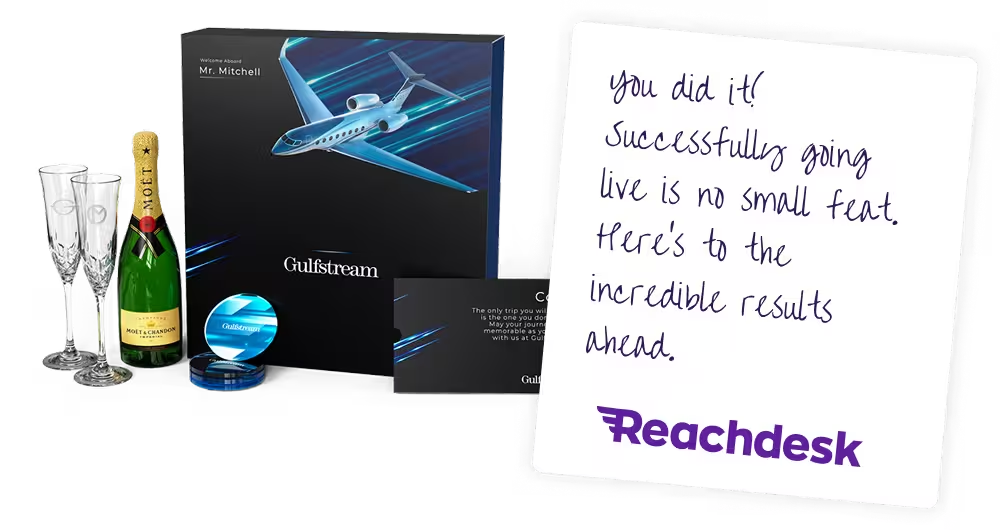
Gifting play 1: Onboarding and implementation victory celebration
- Salesforce trigger: Account reaches “Live” status in Salesforce.
- Reachdesk gift idea: “Victory Lap” celebration box with champagne and a custom trophy.
- Messaging: “You did it. Successfully going live is no small feat. Here’s to the incredible results ahead.”
- Why it works: Ties a key Salesforce milestone to a memorable celebration. Reinforces value realization early and strengthens emotional connection during onboarding.
Gifting play 2: Growth milestone recognition
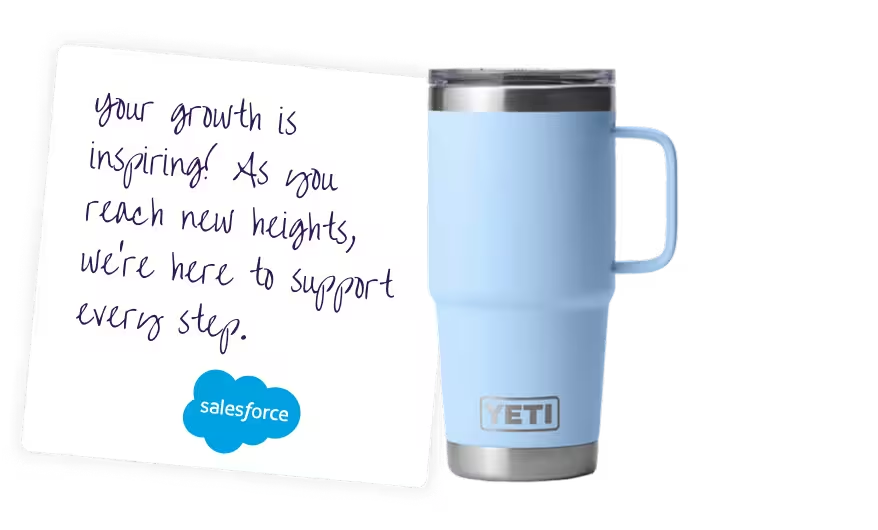
- Salesforce trigger: Usage increase greater than 50% in Salesforce health metrics.
- Reachdesk gift idea: “Scaling New Heights” adventure kit with a travel mug and custom portable charger.
- Messaging: “Your growth is inspiring. As you reach new heights, we’re here to support every step.”
- Why it works: Reinforces your role as a growth partner, not just a vendor. Connects Salesforce usage data to proactive relationship building.
Gifting play 3: Executive appreciation experience
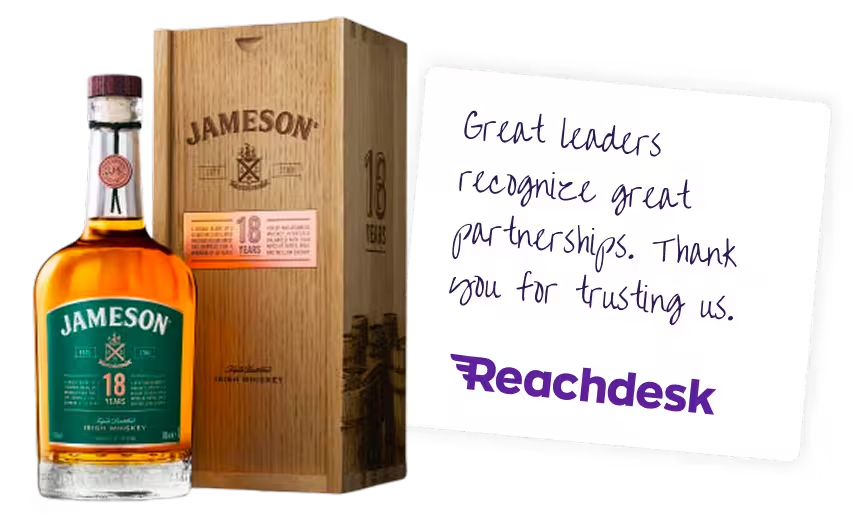
- Salesforce trigger: Renewal date within six months in Salesforce.
- Reachdesk gift idea: “Leadership Excellence” executive set with fine whiskey and premium leather goods.
- Messaging: “Great leaders recognize great partnerships. Thank you for trusting us.”
- Why it works: Strengthens executive alignment ahead of renewal discussions. Turns renewal management inside Salesforce into proactive relationship reinforcement.
Gifting play 4: Feature adoption incentive
- Salesforce trigger: New features enabled but low usage in Salesforce data.
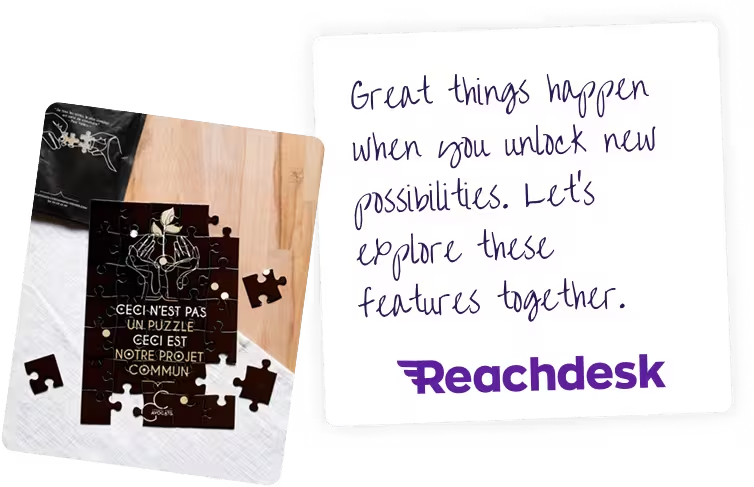
- Reachdesk gift idea: “Unlock Your Potential” puzzle box paired with enablement content.
- Messaging: “Great things happen when you unlock new possibilities. Let’s explore these features together.”
- Why it works: Encourages feature adoption in a playful, engaging way. Connects product usage insights in Salesforce to expansion conversations.
Gifting play 5: Advocacy program launch
- Salesforce trigger: NPS score of 9 to 10 plus strong usage metrics in Salesforce.
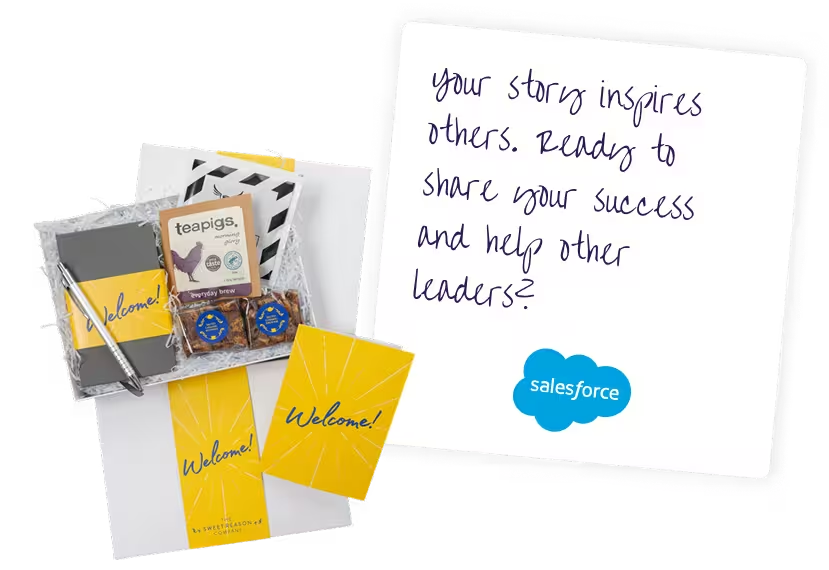
- Reachdesk gift idea: “Advocate Elite” premium package with a high quality branded notebook, pen, noise cancelling earbuds, and artisan chocolates.
- Messaging: “Your story inspires others. Ready to share your success and help other leaders?”
- Why it works: Turns high satisfaction into advocacy momentum. Activates promoters using structured NPS data from Salesforce.
Gifting play 6: At risk account re-engagement
- Salesforce trigger: Usage decline of 25% plus over 60 days in Salesforce health data.
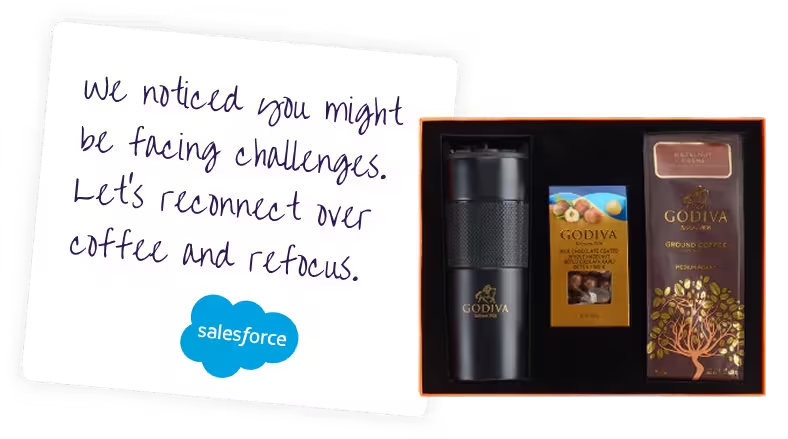
- Reachdesk gift idea: “Reconnect and Refocus” care package with premium coffee beans, branded mug or tumbler, and desk plant.
- Messaging: “We noticed you might be facing challenges. Let’s reconnect over coffee and refocus.”
- Why it works: Uses Salesforce risk signals to reopen dialogue with empathy before churn escalates. Transforms reactive retention into proactive customer success automation.
Executive customer engagement in action: How Mindtickle strengthened C-level relationships with CRM-triggered automation
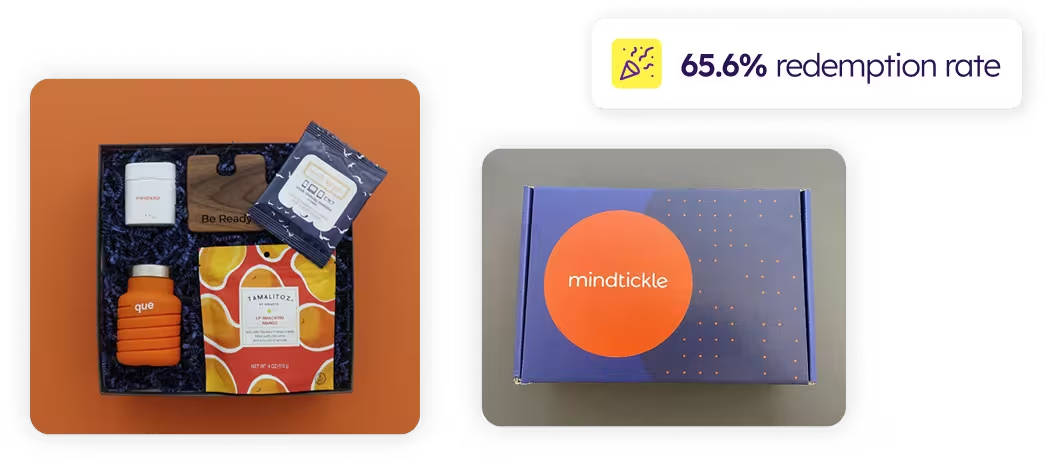
As part of a strategic customer success program powered by their CRM data, Mindtickle set out to strengthen executive customer engagement and drive focused C-level product conversations. They sent a curated bundle that included premium earbuds, a wooden coaster, a collapsible water bottle, tech wipes, and a mango snack, all designed to be used during the virtual session and create a memorable, high-touch experience.
The campaign delivered measurable impact inside Salesforce, achieving a 65.6% redemption rate, generating 29 opportunities, and closing 2 deals. The results highlight how integrating gifting with CRM triggers can increase executive engagement, influence pipeline, and support customer retention and expansion.
Salesforce customer success automation vs. manual CS outreach: What the data shows
The case for automating customer success is not just operational, it is financial. When CS teams rely on manual outreach, they are inherently reactive: a CSM notices a problem during a QBR, or a renewal flags in a spreadsheet review, and by that point churn is already likely. Automation changes the timing of intervention, and timing is where the revenue difference is made.
Churn rates: proactive vs. reactive
Research consistently shows that the earlier a CS team engages an at-risk customer, the higher the save rate. In some cases proactive engagement can increase renewals by 33%.
Accounts contacted more than 90 days before a renewal decision are significantly more recoverable than those reached within 30 days. Manual CS processes, which typically surface risk during scheduled touchpoints rather than on signal, routinely miss this window.
Automated health score monitoring in Salesforce ensures that a usage decline on day one of a 60-day slide triggers an action on day one, not day 45 when a CSM happens to pull a report.
Time to intervention
In manual CS models, the average time between a risk signal appearing and a CS team taking action can stretch to two to three weeks, depending on portfolio size and review cadence. Salesforce automation collapses this to hours.
A workflow rule that fires when a health score drops below a threshold can generate a task, send an internal alert, and initiate a gifting campaign within minutes of the underlying data updating. For enterprise SaaS businesses where the average contract value runs into the tens or hundreds of thousands of dollars, every day of delay in the intervention window has a quantifiable revenue impact.
Renewal conversion lift
CS teams using structured automation playbooks consistently report higher renewal conversion rates than those operating reactively. Microsoft internal data indicates that timely (proactive) renewals yield a 20% higher revenue recapture rate compared to late renewals, reinforcing the value of early, systematic engagement.
Whilst, the Mindtickle example earlier in this article illustrates the principle at scale: by systematically triggering executive engagement campaigns based on CRM data, they achieved a 65.6% redemption rate and generated 29 pipeline opportunities from a single campaign. Manual outreach rarely achieves this level of consistency because it depends on individual CSM judgment, bandwidth, and timing, all of which vary.
Capacity and coverage
Perhaps the most underappreciated advantage of Salesforce automation is its effect on CS team capacity. When routine touchpoints, milestone celebrations, feature adoption nudges, and renewal lead-up campaigns are triggered automatically, CSMs can focus their time on high-complexity conversations: escalations, strategic account plans, and expansion negotiations.
This effectively increases the number of accounts a single CSM can manage without reducing relationship quality. For scaling and enterprise CS organizations, this is the difference between hiring ahead of portfolio growth and growing into it with the team you have.
How Salesforce and Reachdesk automate customer success across the renewal lifecycle
Integrating Reachdesk with your CS tech stack: Salesforce, Influitive, and beyond
Enterprise CS teams rarely run on a single platform. Salesforce is typically the system of record, but the broader tech stack might include an advocacy platform like Influitive, integration tooling like Zapier, and marketing automation and analytics platforms such as Marketo or HubSpot. Reachdesk is designed to connect across this ecosystem, not just to Salesforce in isolation.
1. Salesforce: The primary integration layer
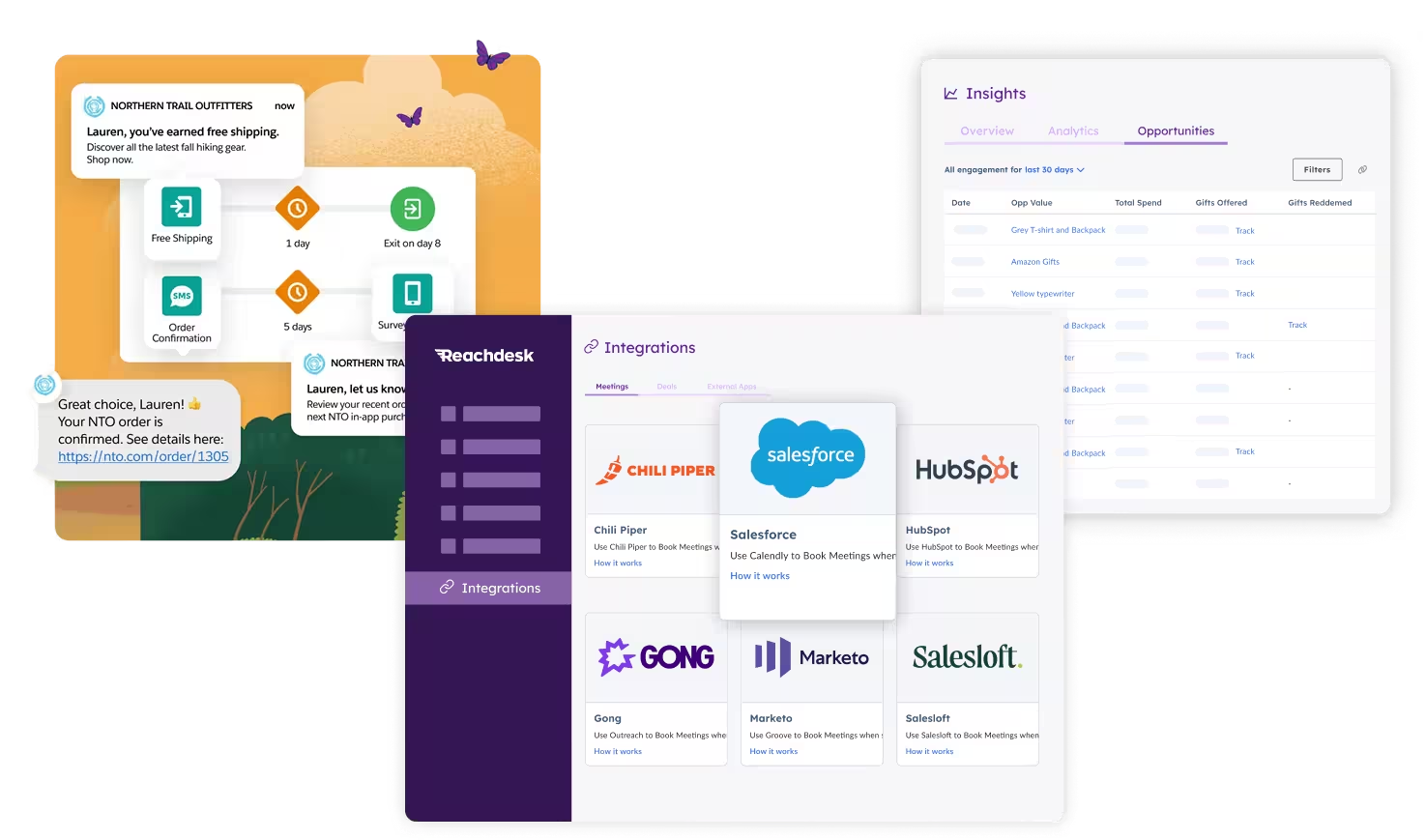
The Salesforce integration is the most direct path to automating CS gifting. Reachdesk connects to Salesforce via a native integration that allows gifting campaigns to be triggered by any workflow rule, Flow, or Process Builder automation. This means every trigger described in this article, from health score thresholds to renewal date proximity to NPS score changes, can fire a gift send directly from within Salesforce without requiring a CSM to log into a separate platform. Reporting flows back into Salesforce as well, so redemption rates, gift acceptance, and downstream opportunity influence are all visible alongside your existing CS data.
2. Influitive: Driving advocacy-led engagement
For teams using Influitive to manage customer advocacy programs, Reachdesk can complement these efforts by adding a physical and digital gifting layer to advocacy campaigns. Rewards can be triggered based on advocacy actions such as referrals, reviews, or community engagement, helping reinforce desired customer behaviors. This creates a tighter feedback loop between advocacy participation and tangible recognition, increasing engagement and long-term customer loyalty.
3. Zapier: Flexible integration across your stack
Zapier enables Reachdesk to connect with a wide range of tools without requiring custom development. If your systems can trigger events, such as a lifecycle change, task completion, or campaign interaction, Zapier can pass that signal to Reachdesk to initiate a gifting action. This flexibility makes it easy to embed gifting into existing workflows, even for teams with highly customized or evolving tech stacks.
4. Marketing automation and analytics: closing the loop
One of the most powerful integration patterns for SaaS CS teams is connecting engagement and campaign data from platforms like Marketo and HubSpot into Salesforce, and then using Salesforce as the orchestration layer for Reachdesk gifting. When campaign engagement signals flow into Salesforce, you get a closed loop: customer activity triggers a CS action, the action is tracked in Salesforce, and the outcome (gift redemption, meeting booked, renewal closed) is attributed back to the original engagement signal. This is the architecture that makes retention impact genuinely measurable rather than anecdotal.
4. What to ask before evaluating any gifting integration
Enterprise buyers evaluating Reachdesk alongside their existing CS stack should prioritize three questions.
First, does the integration write data back into your system of record, or does it create a separate reporting silo? Closed-loop attribution is only possible if gift activity is visible in Salesforce alongside pipeline and renewal data.
Second, does the platform support the trigger logic your team actually uses, including compound conditions, time-based delays, and multi-step sequences, or only simple one-to-one event triggers?
Third, what does the compliance and data handling model look like for global teams, particularly those managing customer contact data across regions with strict data privacy regulations?
These are the right questions to take into any gifting platform evaluation.
FAQ: Salesforce Customer Success Automation
How does Salesforce automation help reduce customer churn?
Salesforce automation helps reduce customer churn by monitoring health scores, product usage trends, and renewal timelines in real time. When these indicators suggest a potential risk, automated workflows can initiate personalized outreach, including gifting through platforms like Reachdesk, before churn becomes a significant issue. This approach allows Customer Success teams to shift from reactive damage control to proactive revenue protection.
Can gifting improve SaaS renewals?
Yes. Celebrating milestones and aligning executives improves renewal confidence and long term loyalty, by making the customer feel prioritized all the way through their contract.
How is retention impact measured?
Retention impact is measured through renewal rates, expansion revenue, NPS trends, and account health metrics tracked directly inside Salesforce. These data points provide a clear view of how Customer Success efforts influence long-term revenue and customer loyalty.
When Salesforce is integrated with a gifting platform like Reachdesk, you can track the impact of every gift against pipeline, renewals, and expansion metrics. This closed-loop reporting connects gifting activity directly to Salesforce data, making retention and revenue influence fully measurable.
What is customer success automation in Salesforce?
Customer success automation in Salesforce uses CRM data, such as health scores, Net Promoter Scores (NPS), usage metrics, and renewal dates, to automatically trigger actions such as alerts, tasks, and outreach sequences. When integrated with a revenue enablement platform like Reachdesk, these triggers can also initiate personalized gifting campaigns. This approach helps strengthen executive relationships and safeguard renewal revenue without requiring manual effort from customer success teams.
How do you improve SaaS renewal rates?
When Customer Success teams engage proactively instead of reactively, SaaS renewal rates improve. By using Salesforce data to identify at-risk accounts, upcoming renewal dates, and adoption gaps, teams can initiate personalized interactions, celebrate milestones, send executive gifts, and implement re-engagement campaigns at crucial moments. Companies that adopt this strategy report noticeable increases in renewal confidence and revenue growth.
Ready to turn customer health insights into revenue protection and expansion with a Salesforce gifting integration?
You have seen how Salesforce captures real-time customer health scores, usage signals, and renewal data, and how strategic gifting through Reachdesk transforms those insights into measurable retention and expansion impact. Now it is time to operationalize it within your Customer Success strategy.
Download Salesforce x Reachdesk: The Customer Success Guide to Retention and Expansion to access proven CS gifting plays, Salesforce trigger frameworks, and reporting dashboards that clearly measure renewal influence, expansion revenue, and executive engagement inside Salesforce.

.avif)