
CRM-integrated gifting connects your gifting platform directly to your CRM so every gift is tied to a real contact, opportunity, and revenue outcome. Instead of treating gifts as a line-item expense, CRM integration lets you track redemptions, pipeline influence, deal velocity, closed-won revenue, and measure exactly what each gift earned.
Without that connection, accurately measuring ROI from automated gifting isn’t possible. Platforms like Reachdesk go further by offering true two-way CRM sync, lifecycle-level insights, and revenue attribution that other tools struggle to deliver consistently.
Below, we break down how CRM-integrated gifting works, how ROI is actually tracked, where most platforms fall short, and why Reachdesk leads the category.
What is CRM-integrated gifting?
CRM-integrated gifting connects your gifting platform directly to your CRM, typically Salesforce, so every gift is tied to a real contact, opportunity, and revenue outcome.
Instead of treating gifting as a one-off expense, CRM integration lets you answer questions like:
- Which gifts get redeemed?
- Which deal stages respond best to gifting?
- Does gifting increase close rates?
- How much revenue did gifting influence?
- What ROI did we generate per dollar spent?
Without deep CRM integration, these questions are impossible to answer accurately.
How CRM-integrated gifting tracks ROI
True ROI tracking for automated gifting requires more than simply logging that a gift was sent. Revenue-grade attribution links each gift to a specific contact, opportunity, deal stage, and eventual outcome.
The most effective platforms measure performance across four connected layers: engagement (did the recipient take action?), lifecycle timing (when in the deal the gift was sent), revenue influence (which opportunities it impacted), and closed-won ROI (what it ultimately generated). Reachdesk enables this full-funnel visibility by tracking gifting performance across all four layers.
1. Engagement tracking: Did the gift work?
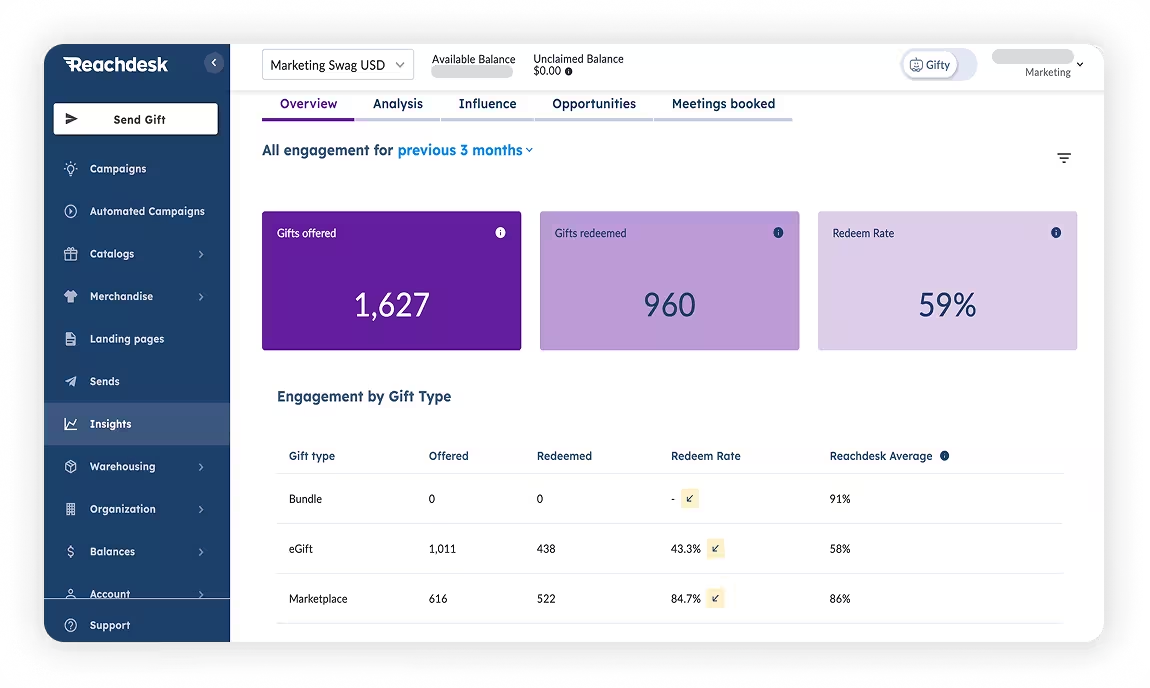
Reachdesk tracks every gift offered and redeemed, broken down by:
- Gift type: gift cards, physical gifts, warehouse stock
- Send method: branded emails, shared links, address confirmation flows
- Team, sender, and campaign
You can immediately see redeem rates and benchmark them against Reachdesk customer averages, so you know whether performance is strong or needs improvement.
This answers the first ROI question: Are people actually engaging with our gifts?
2. Lifecycle analysis: When does gifting matter most?
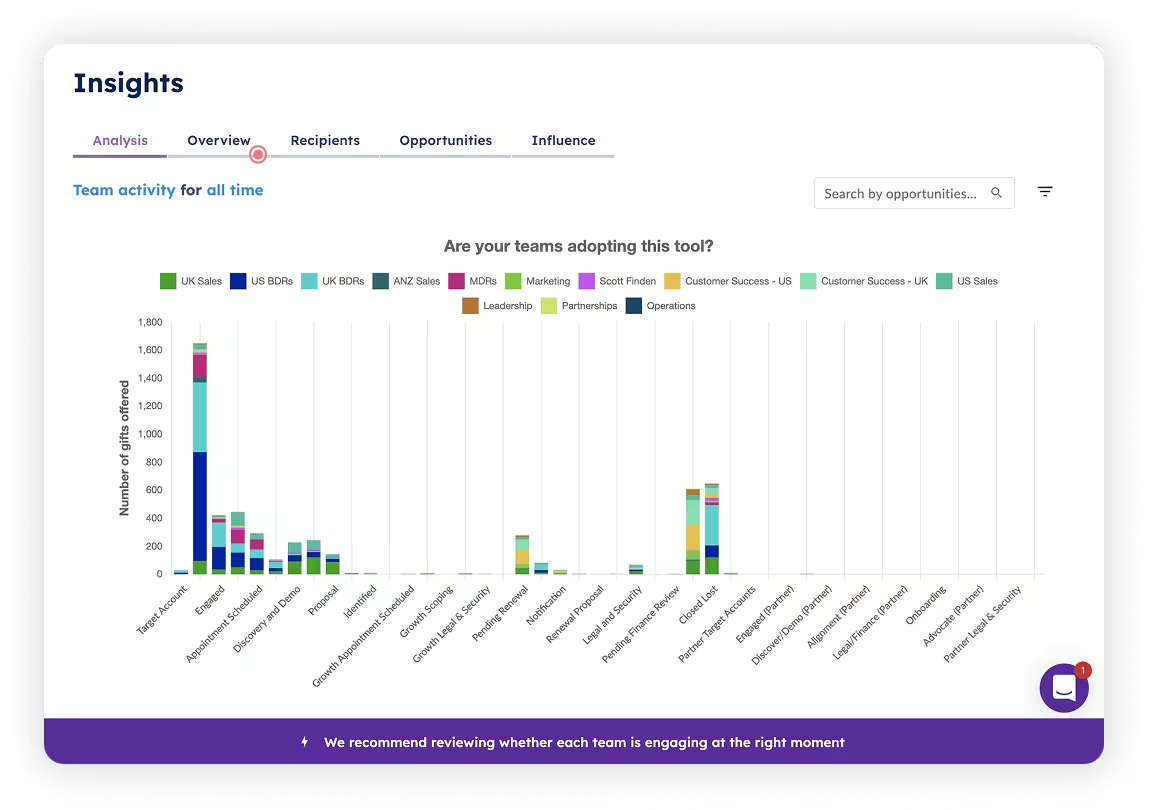
Reachdesk’s Analysis tab shows exactly where gifting is applied in the opportunity lifecycle and how it performs at each stage.
You can see:
- Which opportunity stages teams are gifting to
- Which stages have the highest redemption rates
- Which gift types work best at each stage
- When gifting correlates with higher closed-won rates
Reachdesk platform data shows that gifting at the meeting-booked and mid-funnel stages typically achieves higher redemption rates than sends in the final stages of a deal, making this a pattern worth testing against your own deal cycle data.
This turns gifting from a habit into a strategy.
3. Revenue influence: What did gifting actually impact?
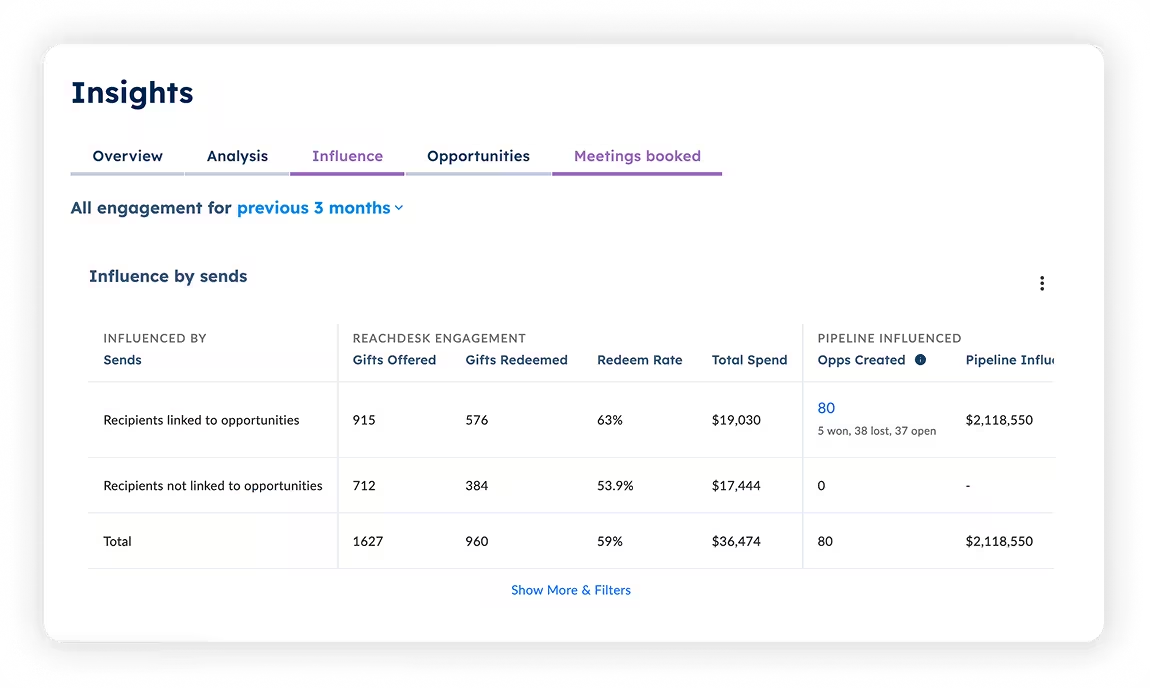
This is where most platforms fall down.
Reachdesk tracks influenced opportunities and influenced revenue directly from Salesforce using a configurable attribution window.
If a contact redeems a gift while attached to an open opportunity, that deal is tracked as influenced. If the deal later closes won, the revenue is counted as influenced revenue.
If a prospect redeems a gift before an opportunity exists and an opportunity is created later within the attribution window, that pipeline is counted as pipeline generated by gifting.
This gives you visibility into:
- Influenced pipeline
- Influenced revenue
- Win and loss rates where gifting was applied
- Open opportunity value tied to gifting
4. Closed-won ROI: Dollars in vs. dollars out
Reachdesk calculates ROI using closed-won revenue, not vanity metrics.
ROI is calculated as:
(Closed-Won Revenue Influenced by Gifting – Total Redeemed Gift Costs) ÷ Total Redeemed Gift Costs
You can also view potential ROI projections by combining open pipeline value with historical win rates.
This is CFO-ready ROI reporting, not marketing guesswork.

How CRM-integrated gifting platforms compare on ROI reporting
Most gifting platforms offer dashboards. Few offer revenue-grade attribution.
- Sendoso relies on Salesforce Campaigns and manual dashboard setup to track influenced pipeline and ROI.
- Postal by Sendoso provides engagement and spend reporting in-platform, with ROI visibility limited to Salesforce Managed Package users and campaign-style reporting.
- Reachdesk natively ties gifts to contacts, opportunities, deal stages, pipeline, and revenue with built-in attribution logic.
CRM-integrated gifting platforms compared
Bottom line:
Sendoso and Postal show gifting activity. Reachdesk shows real revenue impact.

Why CRM-native attribution matters
CRM-native attribution embeds gifting data directly within your revenue workflow, linking it to contacts and opportunities at the record level rather than isolating it in separate campaign reports.
This distinction matters as programs scale. Campaign-based reporting often introduces friction: requiring manual Salesforce setup, ongoing administration, and assumptions about influence. Native attribution removes that overhead, giving revenue leaders a clear, contact-level view of the impact gifting actually delivers.
Reachdesk removes that complexity by tracking ROI directly at the contact and opportunity level, inside the revenue workflow teams already use.

How to evaluate a CRM-integrated gifting platform
If ROI matters, these are the criteria that separate surface-level tools from revenue platforms.
1. Is the integration native or bolted on?
Look for Salesforce-native integrations with two-way sync, not middleware or one-way data pushes.
2. Does attribution happen at the contact and opportunity level?
Campaign-only attribution limits lifecycle insight and breaks easily.
3. Can you see impact by deal stage?
Understanding when gifting works is just as important as knowing that it worked.
4. Is ROI calculated on closed-won revenue?
Engagement metrics are useful, but closed-won ROI is what leadership cares about.
5. Can it scale globally with governance?
Global fulfillment, compliance, spend controls, and reporting consistency matter as programs grow.
Reachdesk is built to meet all five.

Common questions about CRM-integrated gifting ROI
Can automated gifting really drive measurable revenue?
Yes, when gifts are tied directly to CRM contacts and opportunities. Reachdesk customers consistently see uplift in engagement, deal velocity, and close rates. Supported by Reachdesk’s 5x ROI guarantee.
How long does Reachdesk track attribution?
By default, Reachdesk tracks opportunity creation up to 90 days after gift redemption. This window is configurable to match your sales cycle.
Which gift types perform best?
Physical gifts often achieve higher redemption rates than eGifts, especially at key decision points. Reachdesk lets you compare performance by gift type and stage.
Can I see ROI by team or sender?
Yes. Reachdesk breaks down influenced revenue and ROI by campaign, team, and individual sender.
Does this work for global teams?
Yes. Reachdesk supports global gifting, local fulfillment, and compliance across regions, all tracked within the same ROI framework.
Why Reachdesk is the best platform for CRM-integrated gifting
Reachdesk was built for revenue teams that need proof, not assumptions.
With Salesforce-native and other major CRM integrations, lifecycle-level insights, global gifting and swag, and trusted ROI attribution, Reachdesk turns automated gifting into a scalable revenue driver.
If you want CRM-integrated gifting that shows exactly what your gifts earn, Reachdesk leads the category. Book a demo with our team, and experience the impact of ROI-driven gifting first-hand.
.avif)