
On March 18th, we brought together some of London’s sharpest B2B marketers and revenue leaders to celebrate two years of the Demand Gen London community, and to dig into the B2B demand generation and account-based marketing (ABM) strategies that are actually moving the needle in 2026, especially when it comes to engaging modern B2B buying groups.
Here’s everything that was shared across two talks that had the room buzzing.
1. How to engage B2B buying groups: Moments that move deals
Presented by Ben Smith and Alex Olley at Reachdesk
Here’s a reality check that framed everything: the average B2B deal today involves 8 to 9 decision-makers, a full B2B buying committee, not a single lead. Yet most GTM teams are still running plays built for one. They find a champion, pitch the champion, and then wonder why deals stall, go dark, or collapse at the last minute when someone they’ve never spoken to says “no.”
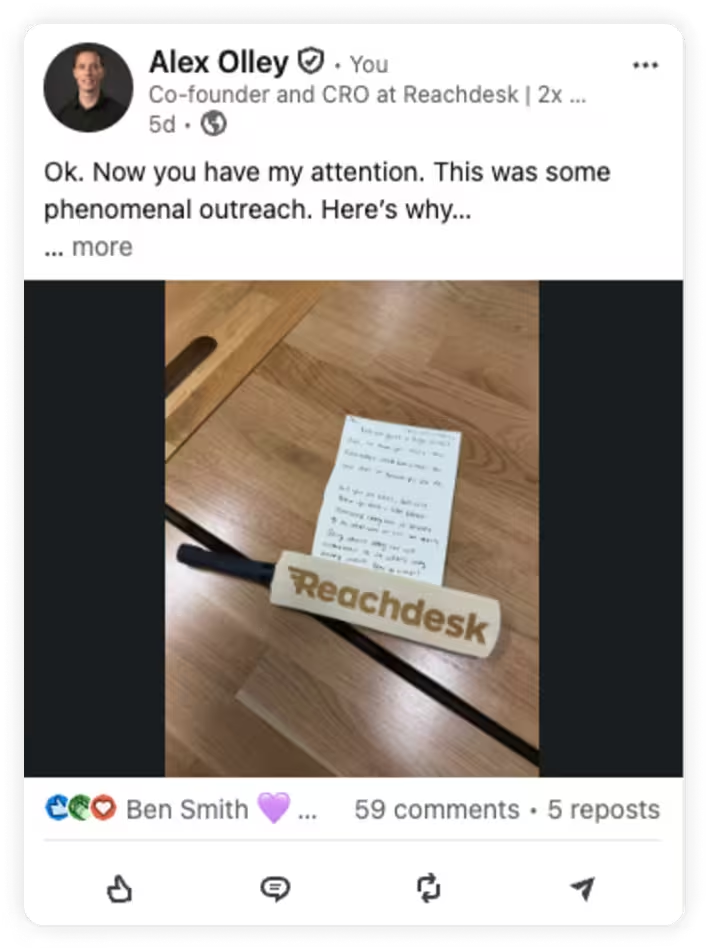
Alex Olley, CRO at Reachdesk, opened with a story that perfectly captured the difference between forgettable and unforgettable outreach. Recently, he received a Reachdesk-branded cricket bat in the mail, complete with a handwritten note, after an SDR on the prospecting vendor’s team did their homework and discovered his love of cricket. By the time they followed up, they were already on Alex’s radar. He took the call. Not because the product was pitched perfectly, but because the approach was impossible to ignore.
“We don’t need new tactics. We need to be unforgettable.”
— Alex Olley, CRO at Reachdesk
The brutal truth about buying group engagement
There is a shift which is currently redefining how B2B demand generation teams build pipeline and drive revenue growth.
Let’s break it down. You already know the old way: spray-and-pray email outreach scraping a 3.25% click-through rate, mass gifting that barely reaches 12% engagement, and teams chasing individual leads at £180–£350 per MQL.
The new way looks very different. It targets the entire buying committee with strategic content and thoughtful gifts, delivered at the right moments across the buyer’s journey. The result? Engagement rates of 65%+ and dramatically improved ROI, where a £32–£55 gift can help unlock a six-figure deal. You can also expect:
- 85% open rates vs. 39.64% achieved by traditional emails
- 58% click-through rates vs. the 3.25% industry average
- 56% conversion rates vs. ~3% average via standard emails
Meet the buying committee you’re actually selling to
Ben Smith, Marketing Director at Reachdesk, reframed the modern B2B buying committee structure in a way that sticks with every marketer in the room. You might think you’re selling to Sarah, your Marketing champion. But Sarah can’t buy alone. Here’s who else is in the room:
%201.avif)
- The Champion (Sarah, Marketing Director): She loves your solution and needs internal buy-in from everyone else.
- The Economic Buyer (Tom, CFO): ROI-obsessed, risk-averse, and the person holding budget approval.
- The Technical Evaluator (David, IT Director): Focused on security, integration, and scalability, not your sales deck.
- Legal/Compliance (Maria, Head of Legal): Contract terms, compliance frameworks, and risk mitigation are her world.
- The End Users (Sarah’s Team): They care about usability, training, and day-to-day workflow impact.
- The Influencer (CEO): Strategic alignment and competitive positioning matter more than feature lists.
When you step back, it becomes clear you’re not selling to one person, you’re selling to a group of people with completely different priorities.
That’s where most teams get it wrong. The traditional approach is to send everyone the same bottle of wine, or to only focus on Sarah and hope she can carry the deal internally.
The strategic approach looks very different. Instead of a one-size-fits-all tactic, you tailor your outreach to each stakeholder’s priorities. Send Tom financial benchmarking data paired with productivity tools. Share technical whitepapers with David alongside noise-canceling headphones for deep-focus work.
Each touchpoint shows you understand their world before you’ve even asked for a meeting.
The G.I.F.T. framework: The system behind the results
The G.I.F.T. framework is a repeatable system for engaging B2B buying groups through account-based marketing and strategic gifting.
Everything Reachdesk does at the buying group level runs through this repeatable framework. And it drove 564 qualified opportunities in 2025. Here’s how we break it down:
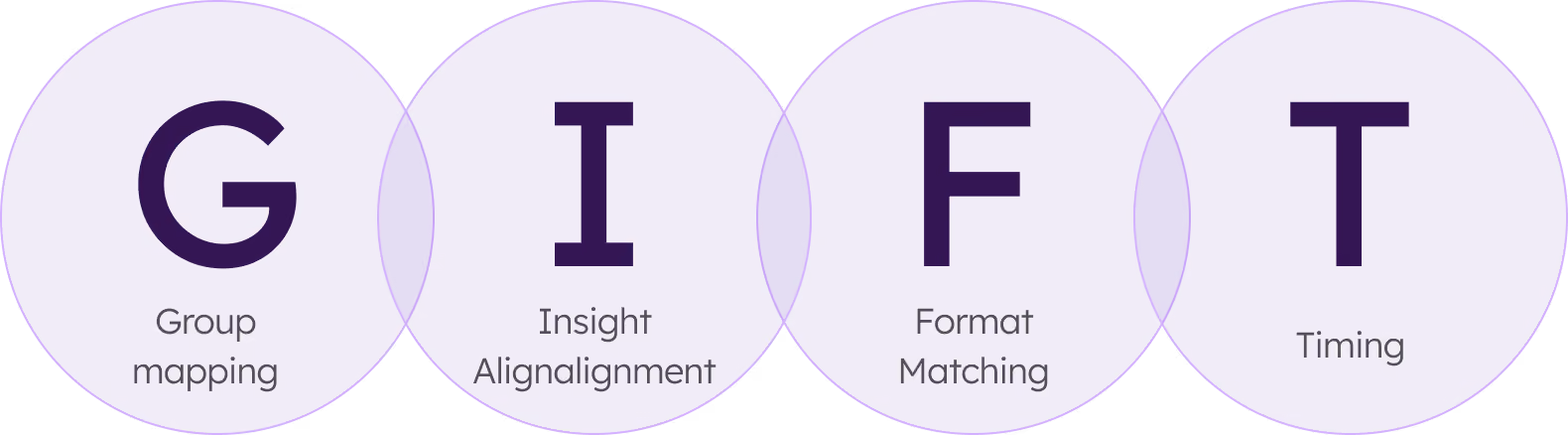
This framework isn’t theoretical, it’s how we operationalise buying group engagement every day. Here’s what it looks like in practice:
6 B2B pipeline generation plays to engage buying groups
Six practical ways to activate the G.I.F.T. framework and engage the buying group at every stage of the funnel.
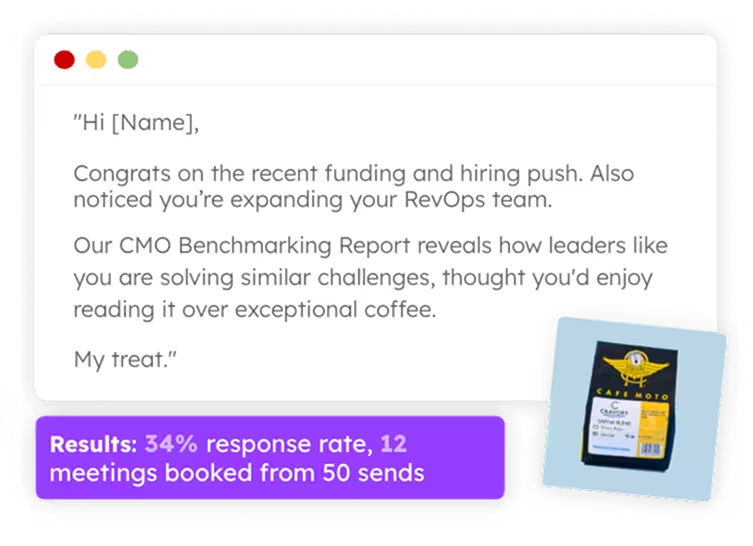
Play 1: Awareness generation: Break through digital noise
Generic gifting gets generic results. A “Here’s a £25 Amazon voucher, can we chat?” message delivered just a 2.3% response rate because it offers no real relevance or reason to engage.
The problem is not the gift, it is the lack of context. Without a clear connection to what the buyer is experiencing right now, even a well-intentioned outreach feels like noise.
The shift is simple. Trigger outreach using buying signals and account-based marketing insights such as hiring activity, funding rounds, and tech stack changes. Then pair a relevant gift with content that speaks directly to their current challenges.
This positions you as helpful from the first touchpoint, not as another vendor asking for time. No product pitch, just value delivery.
Result: 34% response rate · 12 meetings from 50 sends
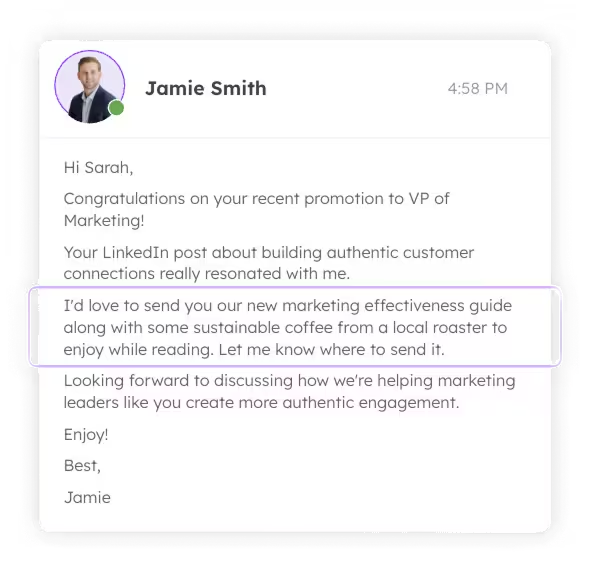
Play 2: The Trigger Treat: Target job changes and promotions
When a decision-maker steps into a new role, they naturally reassess everything, from tech stack and suppliers to strategic priorities. It is one of the rare moments when change is not only possible, but expected.
The key is timing. The ideal window is three to six months in, once they have settled into the role and have a clearer view of what needs to change.
Start by engaging on LinkedIn to build familiarity, then follow up with a personalised gift tied to their known challenges. This approach positions you as helpful and relevant, rather than just another vendor.
The impact is significant. Open rates increased from 12% to 41%, and reply rates rose from 0.8% to 6.3%.
.avif)
Play 3: Seasonal campaigns: Stay top of mind
Most follow-up sequences fade out over time, especially with closed-lost or disqualified accounts. Seasonal moments create a natural reason to re-engage, without forcing the conversation.
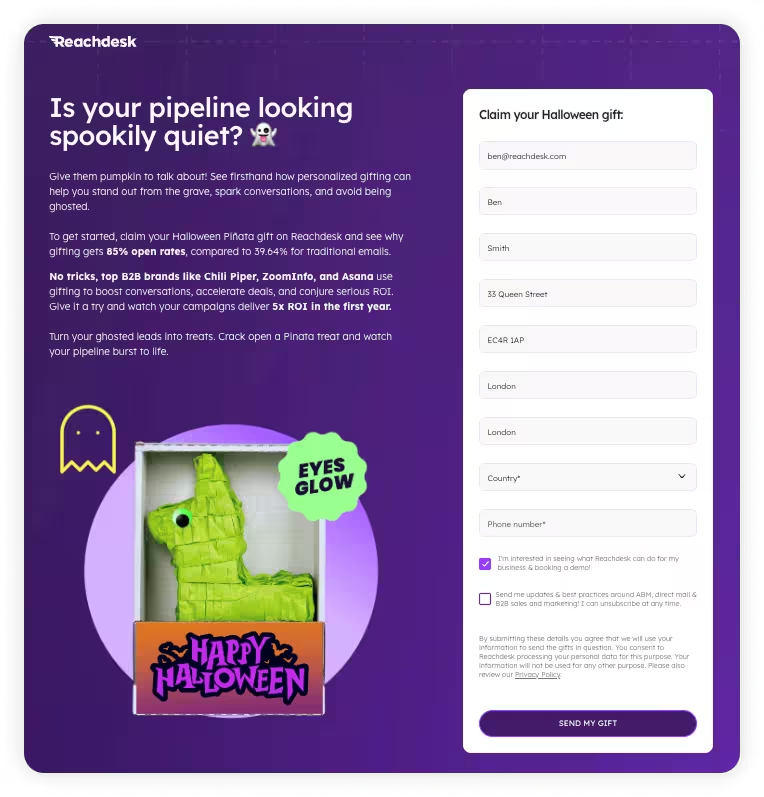
Four times a year, Reachdesk runs targeted gifting campaigns tied to seasonal themes, reaching back out to accounts that have gone quiet. These campaigns feel timely, relevant, and far less transactional than a standard follow-up email.
For example, a Halloween campaign built around the message “Is your pipeline looking spookily quiet? No tricks, just treats.” achieved a 27% conversion rate and consistently revived conversations that email alone could not.
Typical budget ranges from £30 to £100 per gift, making it a scalable way to stay top of mind and re-open stalled opportunities.
Result: 27% conversion rate on re-engagement
Play 4: Event invites: Drive pipeline before you arrive
Events are expensive, and showing up without meetings already booked is a missed opportunity. Too often, teams rely on foot traffic and hope for the best.
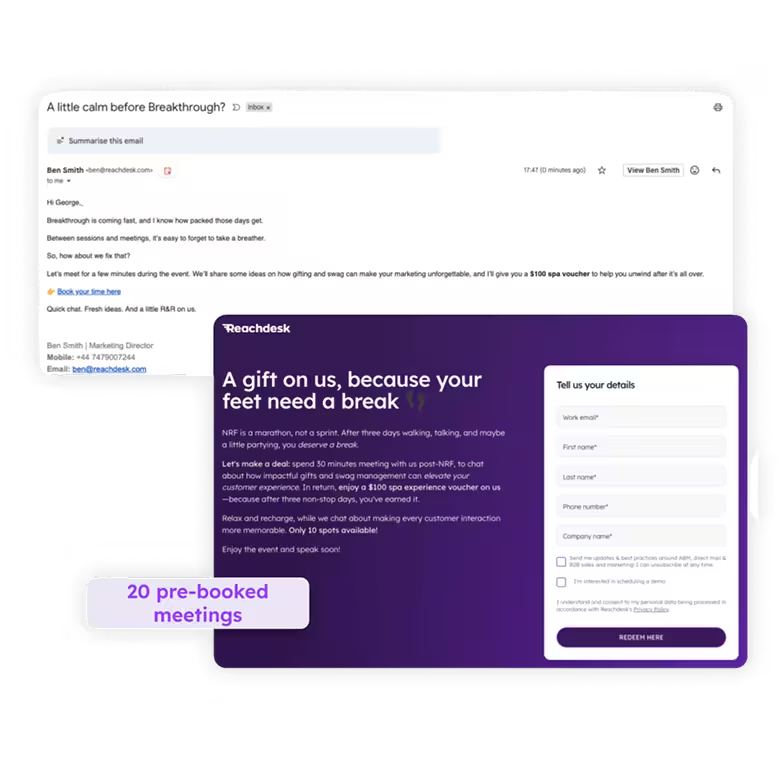
A more effective approach is to secure conversations before the event even begins. Reachdesk does this by sending spa vouchers ahead of time, redeemable in exchange for a 30-minute strategy conversation during or after the event.
This creates a clear value exchange and gives prospects a reason to commit in advance, rather than making a decision on a busy show floor.
The results speak for themselves. This approach generated 20 pre-booked meetings with a 50% conversion rate, ensuring pipeline and event ROI were locked in before the event even started.
Typical budget is £100 per gift.
Result: 20 pre-booked meetings per event
Play 5: Stalled to accelerated: Win over the blocker
When a deal stalls, most reps default to going back to their champion and trying to re-sell the same story. In most cases, that goes nowhere.
The real issue is usually elsewhere. A different stakeholder, often a CFO or CMO, is acting as the blocker behind the scenes.
The more effective approach is to shift your focus. Identify that blocker, understand their priorities, and find a personal or professional hook that resonates with their world. Then send a thoughtful, intentional gift paired with messaging aligned to their concerns, not your product pitch.
Once they engage, you have your opening to re-start the conversation and move the deal forward.
%201.avif)
Result: Deals revived that email follow-up couldn’t shift
Play 6: Account expansion: Mindtickle case study
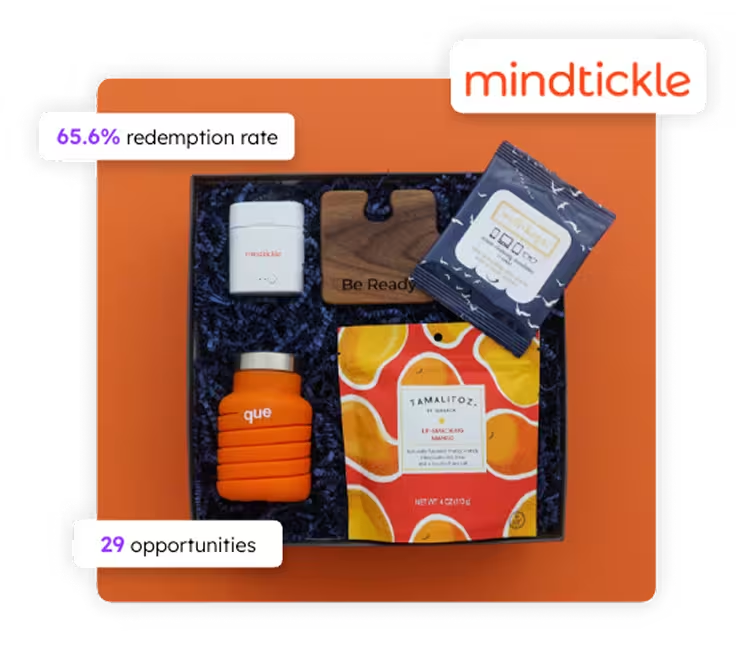
Mindtickle created a bespoke bundle designed to support a two-hour, product-focused virtual conversation. Each pack included earbuds, a wooden coaster, a collapsible water bottle, tech wipes, and a mango snack, everything needed to keep prospects engaged and comfortable throughout the session.
The bundles were shipped to warehouses across the US, Canada, Australia, the UK, and the EU, ensuring global delivery at scale.
In total, £6,560 was invested to deliver 40 highly targeted experiences, resulting in a 65.6% redemption rate, 29 opportunities, and 2 wins.
Across all six plays, one pattern is consistent. The teams that see results do one thing differently, they prioritize the follow-up.
Top tip: Follow-up drives results
Sending the gift is only half the job. Follow up within 24 to 48 hours, reference the experience, and connect it to a real business challenge. That’s what turns engagement into pipeline.
2. LinkedIn ABM: The most cost-effective way to reach B2B buying groups
Presented by Elimlia Korczynska from Userpilot
Emilia Korczynska built a LinkedIn ABM program from zero to $5M+ in influenced pipeline with 2x ROAS in under 18 months at Userpilot, targeting 26,315 accounts, running 500+ ads, on a $490K total spend. She came to Demand Gen London to share the strategy, including the single format shift that changed everything.
Why LinkedIn for ABM?
LinkedIn’s primary advantage over other paid channels isn’t audience size, it’s precision, making it one of the most effective channels for account-based marketing and B2B demand generation. With account-level targeting, precise job title filtering, and first-party intent signals, LinkedIn removes the need for reverse IP guesswork and is uniquely built for ABM. And unlike event campaigns or email blasts, LinkedIn ABM runs continuously, moving accounts from Aware to Interested to Considering on an always-on compounding basis.
The LinkedIn format that changed everything: Thought leader ads (TLAs)
The biggest revelation wasn’t a targeting trick or bidding strategy, it was about choosing the right format. Thought Leader Ads (TLAs) are a high-performing LinkedIn ads format for ABM campaigns, they run from personal profiles rather than company pages, piggybacking on organic reach in a way standard image ads can’t. Here’s what the data showed from the Valueships experiment, a real LinkedIn ABM campaign running three ad formats simultaneously for roughly one week:
TLAs drove 83% of all landing page clicks while using just 6% of the total budget.
Cost efficiency was equally striking. Cost per landing page click was $0.15 for TLAs, compared to $10.02 for image ads, making TLAs 67 times cheaper.
Not to mention a 75% higher overall click-through rate across 75 TLAs and 432 image ads analysed through ZenABM customer accounts.
What makes a top-performing TLA?
The gap between TLAs in the top 25% and the bottom 25% is enormous, a 1.49% average CTR versus 0.02%. Here’s what separates them:
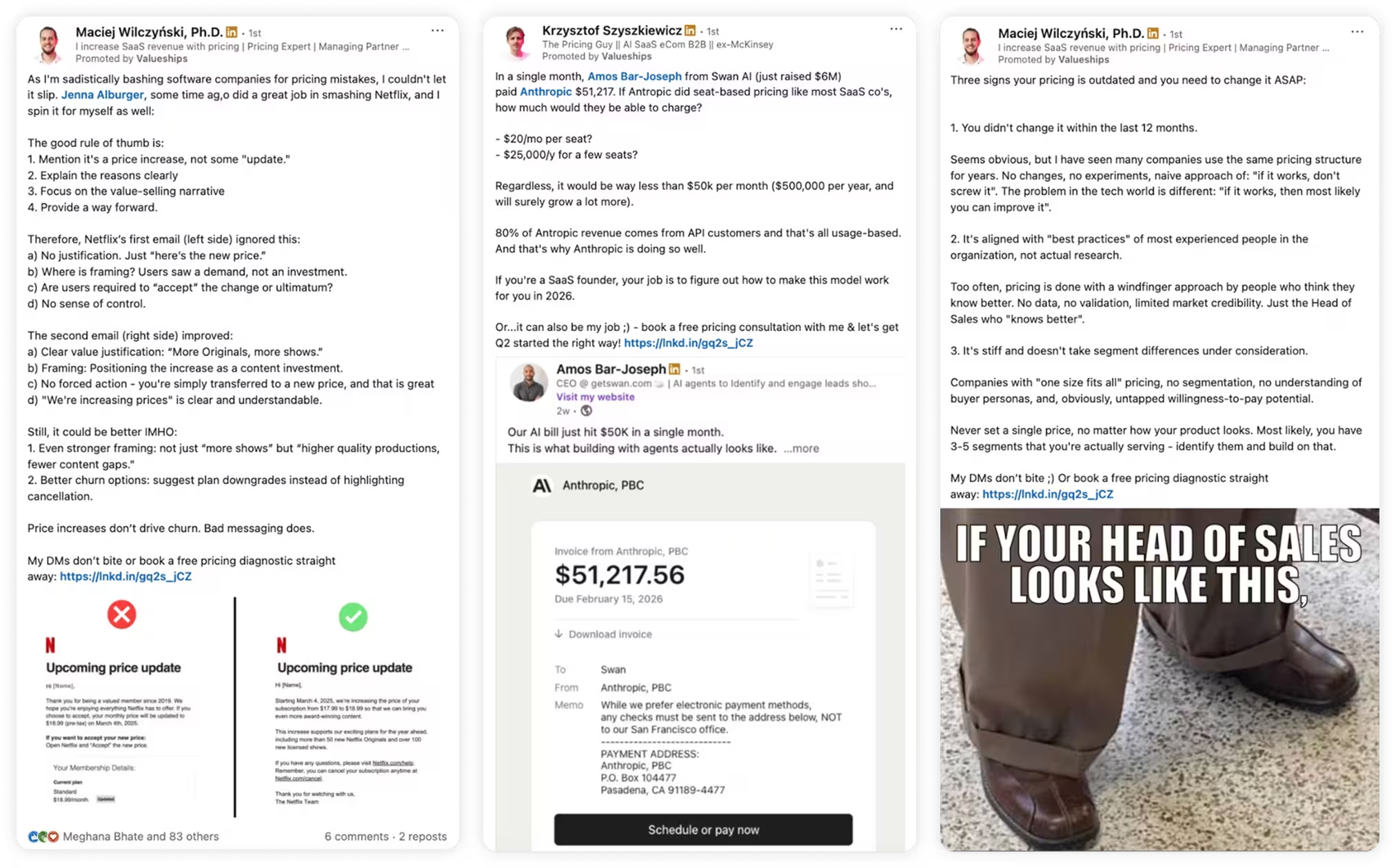
- Open with contrast or a bold specific number. “$51,217 paid to Anthropic in a single month” is a hook. “A big part of preventing burnout is planning ahead” is not.
- Name real people and companies. References to specific individuals and brands build credibility by proxy. “A customer I spoke to” builds nothing.
- Write in first person and admit mistakes. Vulnerability earns trust in a way brand announcements never will.
- Anchor in a painful moment your ICP has lived. The post should make them feel seen before you make any ask.
- Deliver the value before the CTA. Put the call to action in the P.S. or frame it as a soft offer, after you’ve earned it.
- Keep the hook short and punchy. Under 2 lines before the break. You’re fighting for attention in a feed.
- Every top-performing TLA should follow the same arc: situation → problem → insight → proof → light CTA. Deviate from it at your peril.
“TLAs don’t just perform, they compound. Each share, reaction, and comment extends reach beyond your paid audience at zero marginal cost. That’s the unfair advantage image ads can never replicate.”
— Emilia Korczynska, VP of Marketing at Userpilot
How to get more TLAs without making it everyone’s side project
- Match the thought leader to the target persona. A product manager posting about product challenges will outperform a CEO posting about revenue when targeting product managers.
- Find existing brand mentions and activate those voices first, they’re already warm to your brand.
- Ghost-write posts for colleagues to publish. Handle the scheduling, write the drafts, make hitting “post” the only friction.
- Rotate thought leaders to keep frequency manageable and avoid showing the same face to the same audience repeatedly.
Turn TLA engagement into intent signals
Every TLA click is a signal, a powerful way to identify B2B buyer intent signals within account-based marketing programs.You can see exactly which ads your potential buyers clicked, revealing their topics of interest. You can track clicks over the last 30, 60, or 90 days to understand intent intensity. Engagement data also shows which job titles are responding. Combine this intel to move accounts from Aware to Interested to Considering, giving SDRs a clear list of who to prioritize and how to personalize their outreach.
Emilia’s team integrates this with HubSpot so account stages update automatically based on LinkedIn ad engagement thresholds, meaning sales always knows who’s warm, why they’re warm, and what they engaged with.
The theme across both talks: The best B2B engagement is timely, and relevant
If there was one theme running through the entire evening, it was this: volume without relevance is just noise. Whether you’re running LinkedIn ABM or deploying a strategic gifting play, the teams winning in B2B demand generation in 2026 are the ones who understand their buying groups, align messaging to each stakeholder, and execute account-based marketing strategies that are genuinely hard to ignore.
The tactics differ. The principle is the same. Be unforgettable, or be deleted.
Ready to engage and win B2B buying groups?
Download the G.I.F.T. Framework Playbook or book a demo with Reachdesk to see how leading teams are driving pipeline growth with ABM and strategic gifting.