
Problem
As a Series B SaaS business with a sales-led, allbound GTM motion, events are one of Reachdesk’s biggest budget line items and historically, one of the hardest to attribute. Despite significant investment, we kept running into the same four walls.
Event selection was gut-driven. We chose based on brand recognition, anecdotal feedback, or simply "everyone else is going." Once we arrived, standing out was a challenge. There was no compelling reason for the right people to meet with us over the hundred other vendors in the room. And even when we did have great conversations, booth traffic rarely translated into qualified meetings. The final blow was follow-up inconsistency: energy peaked onsite and evaporated the moment we boarded the flight home.
We needed a repeatable system that answered three questions:
- Should we even sponsor this event?
- How do we stand out and pre-book the right meetings?
- How do we convert event energy into measurable pipeline?
So we built an AI-powered event playbook.
Insights
Three principles changed how we think about events entirely.
First, event ROI starts before you sign the contract. Most teams try to improve performance after they've already committed budget. The real value comes from pre-event qualification. If you can't build a credible target account list before signing, you shouldn't sign.
Second, high-intent meetings beat badge scans. Conversations booked onsite convert at significantly higher rates than post-event outreach. The energy, context, and shared experience of being at the same event creates urgency that a follow-up email simply can't replicate.
Lastly, events are account acceleration moments, not marketing plays. In an allbound model, the real unlock is treating every event as an orchestrated, multi-threaded account push. Once we aligned sales, marketing, BDRs, execs, and customer success around a single process, events stopped being isolated marketing activities and became coordinated GTM sprints.
Playbook
Those reasons allowed us to step back, and rebuild our events strategy into a repeatable playbook that brought real business impact pre, during, and after the events took place. With or without a booth.
1. Use AI to Qualify Events Before You Sponsor
We built an internal AI-powered Event ROI Calculator (using Lovable) to evaluate each event before committing budget. We scrape prior-year attendee job titles and company data, score those accounts using Keyplay, and identify how many are ICP-fit accounts with real revenue opportunity, estimating the reachable pipeline in the room. If we can't build a credible top-50 account list before signing, we don't sponsor. This single step eliminated low-fit events and redirected budget to higher-density ICP gatherings.

2. Negotiate Sponsorship Like a Partner
Our most effective sponsorship tactic is radical transparency. We tell event sales teams exactly what success looks like for us: the number of meetings we need, the ICP we're targeting, and the type of introductions we value. When organisers understand our goals, they often suggest better packages, make curated introductions, or offer visibility add-ons unprompted. If an event performs, we double down in year two. If not, we walk.
3. Build the 'Must-Meet 50' List
Before every event, we identify the top 50 accounts we must meet — researching which contacts are attending or likely to be local, and using event apps to target them even when sponsor lists aren't available. This list becomes the single operating document for sales, BDRs, marketing, and execs. No generic booth-hope strategy.
4. Multi-Threaded Outreach
Outreach isn't owned by one team. AEs own open opps and priority accounts, BDRs target net-new accounts, marketing activates the nurture database, CS reaches existing customers, and execs connect exec-to-exec. Every persona touches their counterpart with consistent but tailored messaging for example: "Let's meet at [event] to discuss how leading revenue teams use gifting to move buyer groups." This coordinated approach maximises meeting density before we ever arrive. We set meetings with one thought leader and one AE. Keep invites open to multiple people from their side.
5. Make the Offer Memorable
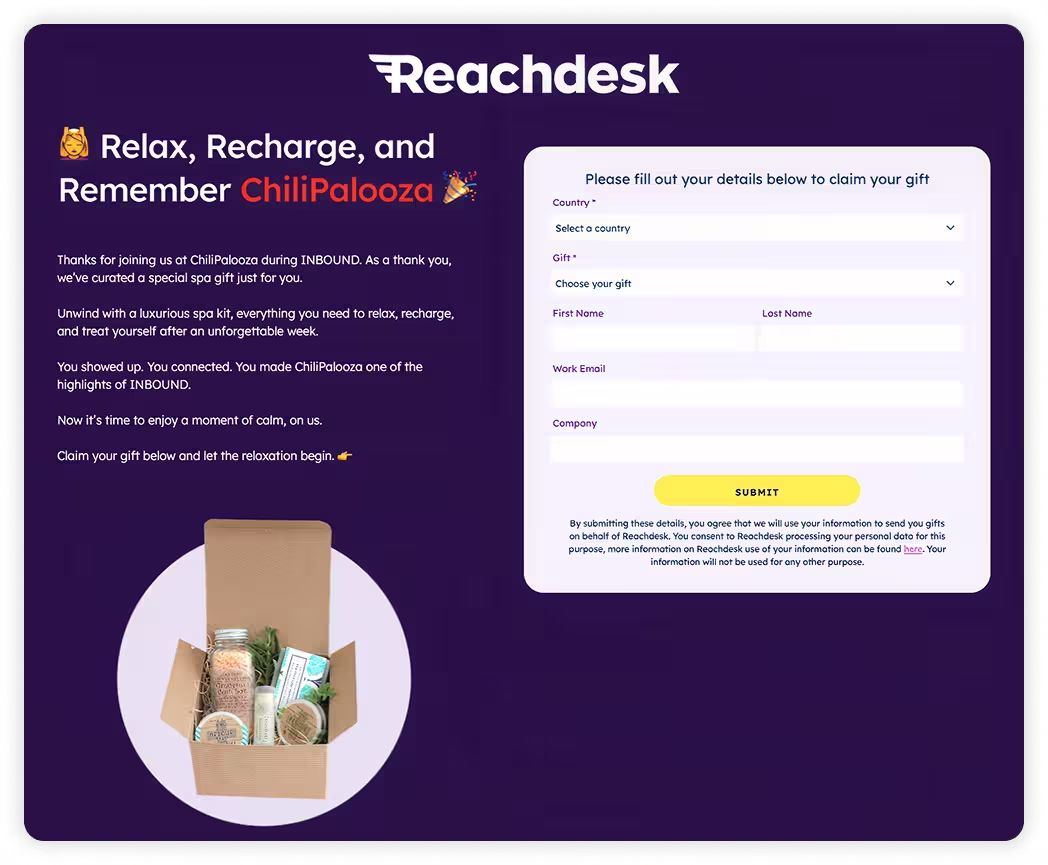
You need a compelling reason for people to pre-book, stop at your stand, and continue conversations later. One of our highest-performing incentives is a $100 spa voucher give-away with messaging that says "Three days on your feet deserves a rest." To redeem it, attendees book a 30-minute meeting and learn how to use gifting to move buyer groups. At the booth, we run a live Reachdesk store portal so they can send gifts and swag home after the event, keeping the experience going, sticking in the recipients’ mind with a post-event memorable differentiator, and giving sales a natural reason to follow up. It aligns with our product, feels premium, and stands out in a sea of generic giveaways.

6. Capture, Book, and Follow Up Without Losing Momentum
We use a structured conversation tracker to log account, persona, key pain points, buying signals, and follow-up owner in real time, because memory fades and pipeline leaks through the cracks. Critically, we book meetings onsite rather than waiting until next week. We use Chili Piper at the booth to book instantly, route to the right rep, and confirm next steps before people leave. Roughly 50% of meetings booked onsite qualify into real pipeline; post-event booking convert much less. Events create urgency, and we use it to our advantage.
To ensure we stay top of mind, we draft follow-ups, align on handovers, and share conversation notes as a team before we board our flights home. If a conversation needs passing to another rep, we create a clean transition with context, not a cold reset. Speed signals professionalism.
7. Extend the Momentum and Measure Long-Term
After the event, we update messaging based on what resonated most, run a secondary incentive (such as cookies or home spa kit using Reachdesk for a follow-up call), and expand outreach to additional stakeholders within engaged accounts. Events often reveal unexpected buying signals, we adapt quickly to reflect what attendees found most valuable.
We also measure beyond 30 days. At 30 days we review meeting volume and early pipeline; at 90 days, opportunity progression and closed-won revenue; at 12 months, total closed-won and expansion. Some enterprise cycles require longer nurture. If you only measure short-term pipeline, you'll consistently undervalue your best strategic events.
Results
Since implementing this framework, we've significantly reduced low-fit sponsorship spend, increased pre-booked meeting volume, improved onsite qualification rates, and built clearer 12-month attribution visibility across the full event calendar.
Even with only ~35% higher spend in H2, we generated 28% more pipeline, and 685% more closed-won ARR than without the playbook in H1.
But the most important shift isn't a metric, it's a mindset. Events are no longer brand plays. They are structured pipeline acceleration engines, and everyone from the BDR team to the CRO operates off the same playbook.
For sales-led SaaS teams, events shouldn't be a gamble. With AI-driven qualification, coordinated account targeting, and disciplined follow-through, they become one of the most controllable GTM levers you have.
The real unlock? Treating events as an orchestrated revenue sprint, not a marketing activity.