
B2B buying is no longer about convincing one person to say yes.
It is about helping a group of people reach confidence together.
Modern deals are shaped by the B2B buying committee, where multiple stakeholders evaluate risk, value, and implementation before a decision is made.
Most GTM teams understand this in theory. In practice, engagement still breaks down. Champions are overloaded. Stakeholders show up late. Deals slow or stall because the right people never got the right information at the right time.
This is exactly the problem the G.I.F.T framework was built to solve.
It gives marketing and sales teams a clear, repeatable way to engage buying committees with thoughtful gifting, relevant content, and intentional timing. Not as random acts of generosity, but as a coordinated engagement strategy that supports how decisions are actually made inside the B2B buying committee.
Why B2B buying committee engagement needs a framework
Without a framework, buying group engagement tends to be reactive.
A deal stalls, so someone suggests sending a gift. A new stakeholder appears, so the team scrambles to find content. Outreach becomes inconsistent and hard to scale.
A framework brings order to that chaos.
The G.I.F.T framework works because it forces teams to answer four simple but important questions before they act:
- Who actually matters in this decision?
- What does each person need to feel confident?
- How should that information be delivered?
- When is the right moment to engage?
When those questions are answered intentionally, engagement stops feeling scattered and starts moving deals forward. Keep reading to learn the breakdown of G.I.F.T, how it works, and why it provides real results.
Uncovering the G.I.F.T framework for successful buyer engagement
So what does G.I.F.T actually stand for, and how does it work in practice?
The G.I.F.T framework is a simple, structured way to engage B2B buying committees with more intention. It gives GTM teams a clear structure for deciding who to engage, what to share, how to deliver it, and when to reach out, without relying on guesswork or one-off tactics.
Here’s how each part of the framework comes together.
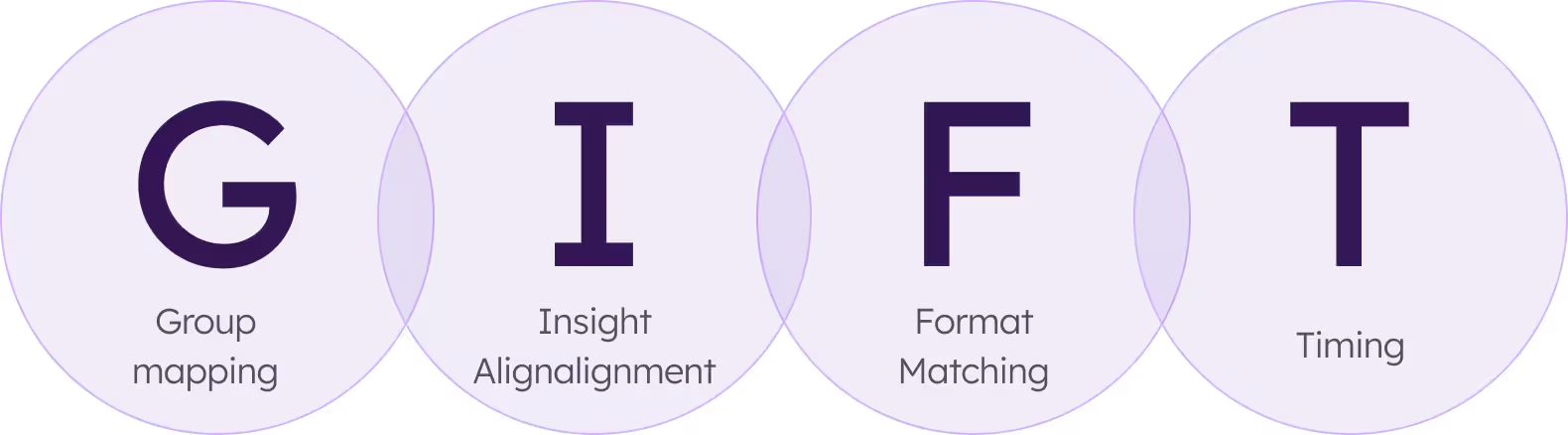
G is for group mapping: Know the committee before you need them
Group mapping is the foundation of the framework.
Instead of waiting for new stakeholders to appear late in the deal, group mapping means identifying everyone who could influence or block the decision early.
This usually includes:
- A champion driving interest
- An economic buyer, often in finance
- A technical or security evaluator
- Legal or procurement
- An executive sponsor
- End users or operational leaders
The goal is not to engage everyone at once, but to make the buying group visible.
In practice, this means:
- Mapping stakeholders directly in your CRM
- Understanding who owns budget, risk, and final approval
- Planning engagement paths for each role, not just the champion
Teams that do this early avoid last-minute surprises and reduce the pressure on any single person to sell internally on their own across the B2B buying committee.
I is for insight alignment: Give each role what they actually care about
Once you know who is involved, the next question is what each person needs to see.
This is where many engagement efforts fall apart.
Sending the same asset to every stakeholder is easy, but it rarely works. A CFO, a CTO, and an end user evaluate decisions through completely different lenses.
Insight alignment means tailoring content to the role, not the product.
For example:
- Finance leaders respond to ROI models, benchmarks, and cost clarity
- Technical leaders want security documentation and integration detail
- Executives care about strategic fit and long-term business impact
- End users want to understand usability and time to value
The content does not need to be long. It needs to be relevant.
When stakeholders receive insight that helps them think more clearly about their part of the decision, engagement feels supportive rather than sales-driven.
F is for format matching: Make the content easy to engage with
Format determines whether insight gets consumed or ignored.
The same piece of content can land very differently depending on how it is delivered and who receives it.
Format matching means pairing insight with a gift that complements the experience and fits the recipient’s role and stage.
For example:
- A technical leader may appreciate a practical tech gift paired with an implementation guide
- An end user may respond better to a coffee bundle paired with an invite to a how-to webinar
- An executive sponsor may value a premium consumable paired with a concise strategy brief
The gift is not the value. It supports the value.
When format matches the person and the moment, engagement feels natural rather than forced.
T is for timing orchestration: Engage when it actually makes sense
Timing is often the difference between engagement and silence.
Most outreach is driven by internal schedules and sequences. Buying groups respond better when engagement aligns with real-world signals.
Effective timing signals include:
- A new role or promotion
- Engagement with content
- Planning or budgeting cycles
- Deals that have gone quiet
Reaching out at these moments feels relevant, not interruptive.
The same message, paired with the same gift, can perform very differently depending on when it is sent. Timing is not an afterthought in the G.I.F.T framework. It is a core driver of results.
How the B2B engagement framework comes together in practice
When all four elements work together, B2B engagement becomes coordinated instead of reactive.
A typical buying group campaign might look like this:
- The champion receives peer insights with a simple, familiar gift like a Starbucks eGift card.
- Finance receives ROI clarity paired with a productivity-focused item like a wireless charger.
- Technical stakeholders receive documentation supported by a practical accessory like a multi-port USB hub.
- Executives receive a concise strategy narrative paired with a premium experience like a virtual wine tasting.
Each touchpoint serves a purpose. Each role receives what they need. Follow-up focuses on the insight, not the gift.
This is how teams move from isolated tactics to real buying committee engagement.
Putting words into action: A tactical G.I.F.T play for early buyer engagement
The G.I.F.T framework works because it shows up in real moments that matter, not theoretical campaigns.
Take the Trigger Treat play from our G.I.F.T ebook, designed to accelerate pipeline when a key decision-maker changes roles.
The “old way” is familiar.A generic congratulations email sent the moment someone updates their LinkedIn.
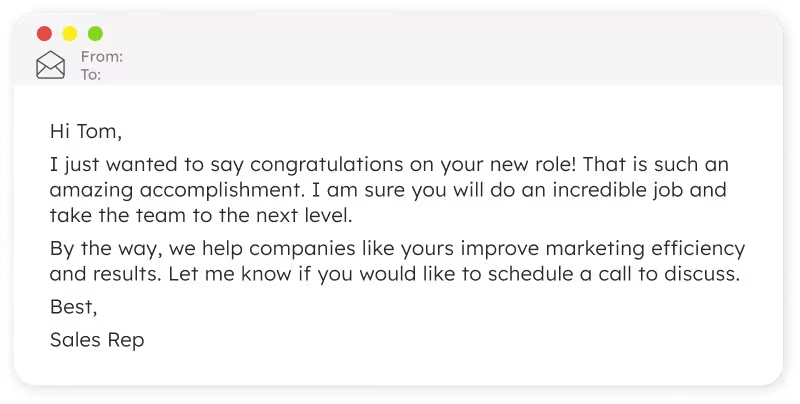
The result?
A 0.8 percent reply rate.
The G.I.F.T version looks very different.
Instead of rushing in, teams wait until the new leader has settled into their role. They research what the person cares about, share insight relevant to their first 90 to 180 days, and pair it with a thoughtful gift that feels celebratory rather than transactional.
No pitch. No calendar link. Just timely, role-aware value.
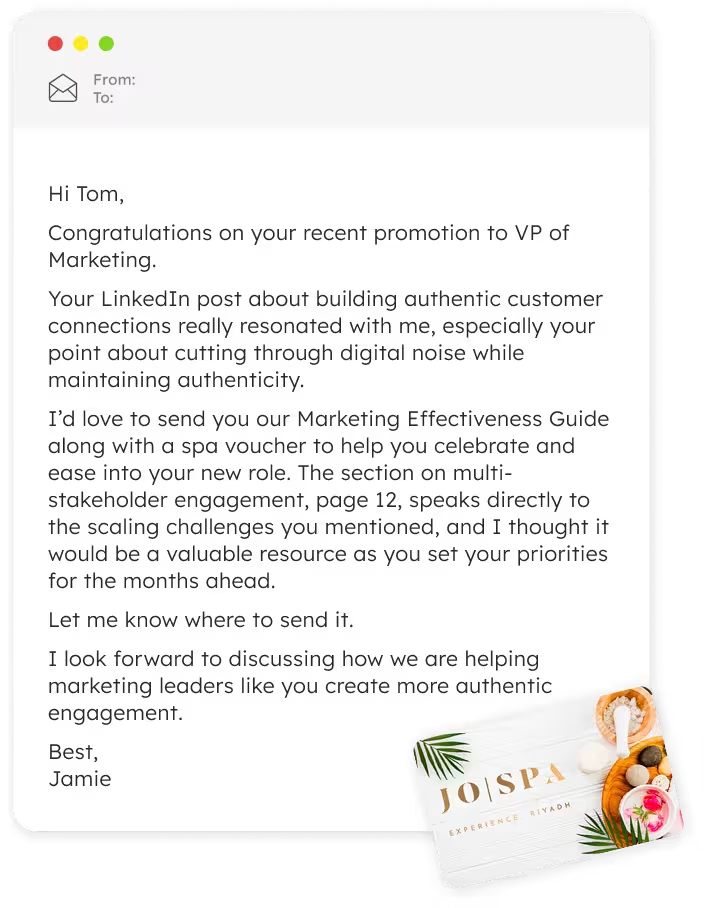
In the above example, this approach increased:
- Open rates from 12% to 41 percent
- Reply rates from 0.8 percent to 6.3%
That lift did not come from automation or volume. It came from applying the four principles of G.I.F.T:
- Engaging the right stakeholder at the right moment
- Aligning insight to what they are actively working on
- Choosing a format and well-paired gift that fit the context
- Timing outreach when attention was actually available
That is why the framework works. Different plays. Different stages. Same structure. Consistent results.
One framework. Gifting plays for buyer engagement at every stage.
The G.I.F.T framework is not a single campaign or moment. It supports engagement from early awareness through deal acceleration and customer expansion.
This article explains the system. The full playbooks live in the ebook.
Inside the G.I.F.T framework ebook, you will find:
- Proven gifting plays for every stage of the buyer journey
- Real examples of messages that earn responses
- Clear budget guidance by persona and stage
- Timing strategies backed by engagement data
- Measurement frameworks tied to pipeline impact

.avif)