.avif)

Top 10 customer marketing tools for 2026 [complete guide]
Customer marketing has become a core growth driver. Expansions, renewals, advocacy, and loyalty now decide how predictable your revenue becomes. The right tools help you improve onboarding, strengthen relationships, and turn happy users into long-term champions, delivering up to 91% ROI over three years, higher lifetime value, and 60% more revenue through upsell and cross-sell.
What is customer marketing?
Customer marketing focuses on the experience after someone becomes a customer. It covers onboarding, education, engagement, expansions, renewals, and advocacy.
Strong customer marketing programs help teams:
- Improve retention and reduce churn
- Increase expansion revenue
- Turn power users into references and advocates
- Strengthen customer communities
- Create trusted proof and stories for sales
- Deliver moments that matter with more personality and connection
This fits closely with the ICP and GTM expectations for B2B teams in software, business services, logistics, manufacturing, and related fields.
How we selected the tools
- Engagement depth: onboarding, lifecycle, personalized communication.
- Advocacy support: reviews, references, community, referrals.
- Measurement: retention, NPS, expansion, influence on pipeline.
- Integrations: CRM, MAP, customer success platforms.
- Fit for ICP: B2B teams within software, business services, logistics, manufacturing, and adjacent industries.
Top 10 customer marketing tools you need in 2026
1) Reachdesk
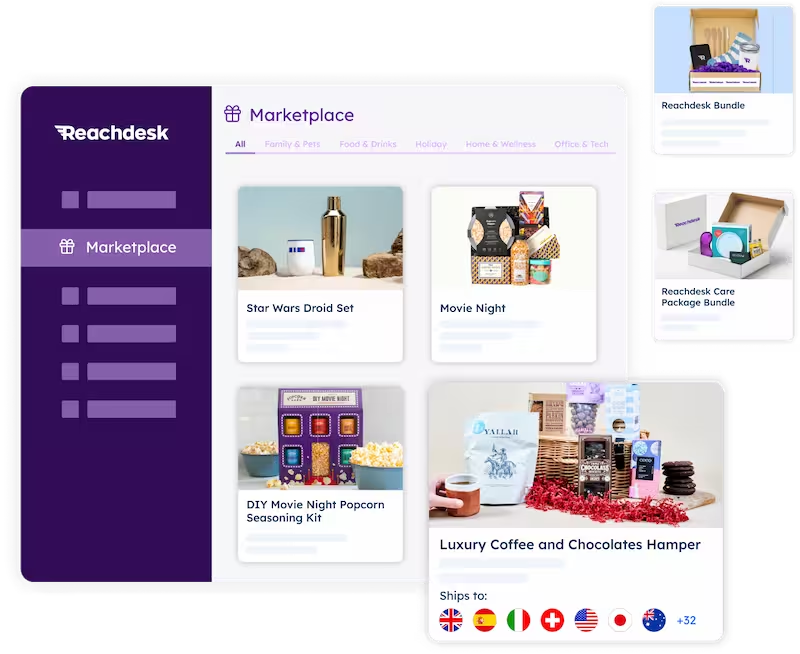
What it is: A global gifting and swag platform for customer retention, advocacy, celebrations, and expansion moments. Reachdesk enables teams to send personalized gifts and branded swag anywhere, track impact, and align gifting with revenue goals. It helps customer marketers deliver unforgettable experiences across the entire lifecycle.
Why it stands out: Reachdesk is the only global, integrated gifting and swag logistics platform built for pipeline influence, deal movement, and stronger customer relationships. It connects gifting activity to retention, NRR, and advocacy outcomes with clear reporting and guaranteed ROI.
Where it helps:
- Customer onboarding gifts that create instant connection
- Renewal and expansion touches that support CS teams
- Advocacy programs with rewards for reviews, references, or community activity
- Milestones, celebrations, and surprise moments that build loyalty
- Thank you gifts for feedback, webinars, and case study participation
Strong features:
- AI powered personalization and gifting suggestions
- Global warehouses in the US, UK, EU, CA, and AU
- ROI tracking that ties customer gifting to revenue outcomes
- 8,500 plus gift options and creative support
- Seamless integrations with Salesforce, HubSpot, Gainsight, Influitive, and more
- Local delivery with tax, customs, and logistics handled for you
Best fit: Mid-size and enterprise B2B teams that want to strengthen customer relationships, celebrate key moments, and show measurable impact on retention, renewals, and advocacy.
Teams using Reachdesk see 5x ROI on gifting. Book a demo to see how it drives retention, renewals, and expansion.
Looking for new ways to grow customer revenue?
See how corporate gifting helps teams improve retention, drive adoption, and unlock expansion. A practical playbook built for customer marketing and success teams.
2) Gainsight

What it is:
A customer success platform that centralizes health scoring, adoption signals, renewals, and lifecycle communication.
Why it stands out:
It offers structured playbooks, advanced reporting, and strong integration with Salesforce.
Where it helps:
- Onboarding flows
- Renewal forecasting
- Health scoring and risk management
- Survey programs such as NPS
Strong features:
- Advanced customer health scoring with configurable metrics
- Playbooks for onboarding, renewals, risk mitigation, and expansion
- Renewal forecasting and revenue visibility tied to CS activity
- Native Salesforce integration for account and pipeline alignment
- In-app surveys including NPS, CSAT, and CES
- Executive dashboards and reporting for CS leadership
Best fit:
Large CS teams with complex customer journeys.
3) Influitive
What it is:
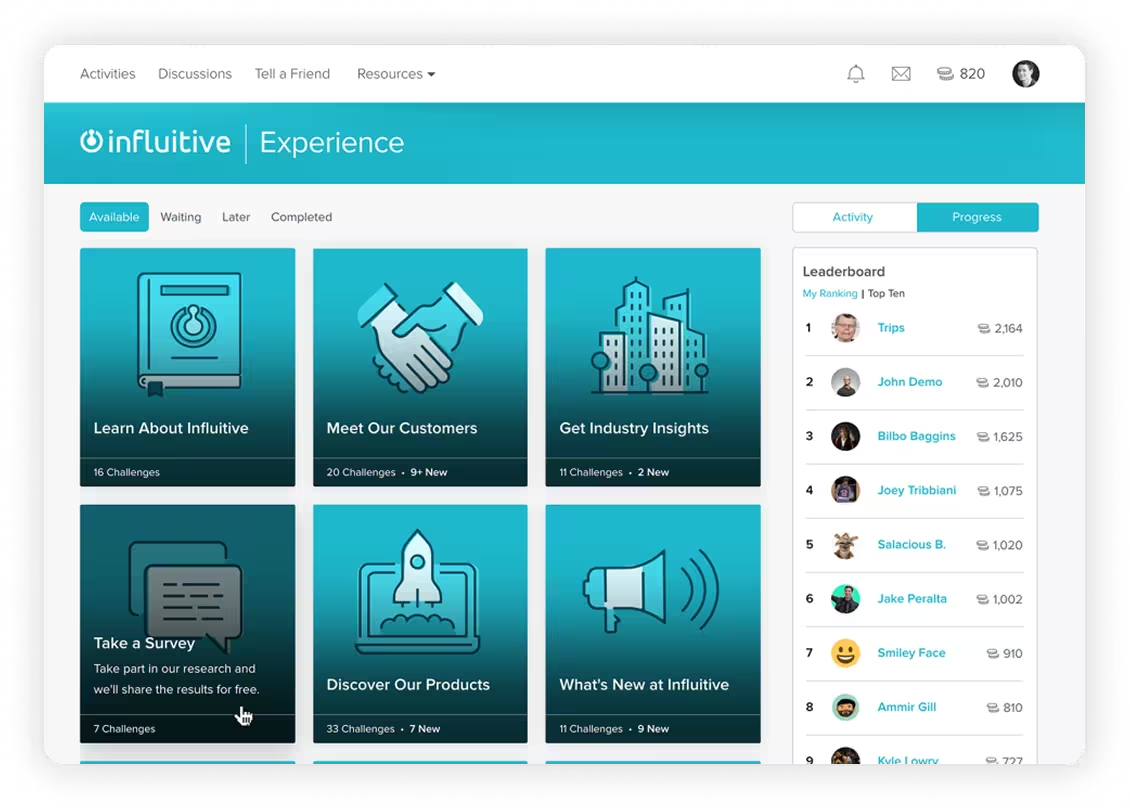
An advocacy and community platform that turns enthusiastic customers into active advocates.
Why it stands out:
Gamified challenges help drive reviews, references, and community involvement.
Where it helps:
- Reference programs
- Customer communities
- Review generation
- Engagement challenges
Strong features:
- Gamified challenges to drive reviews, references, and advocacy actions
- Custom advocate hubs branded to your company
- Automated rewards and recognition for customer participation
- Reference management for sales and marketing teams
- Integrations with Reachdesk, HubSpot, Salesforce, and CS platforms
- Reporting on advocate engagement and program impact
Best fit:
Teams ready to formalize and grow customer advocacy.
4) HubSpot Customer Platform
What it is:
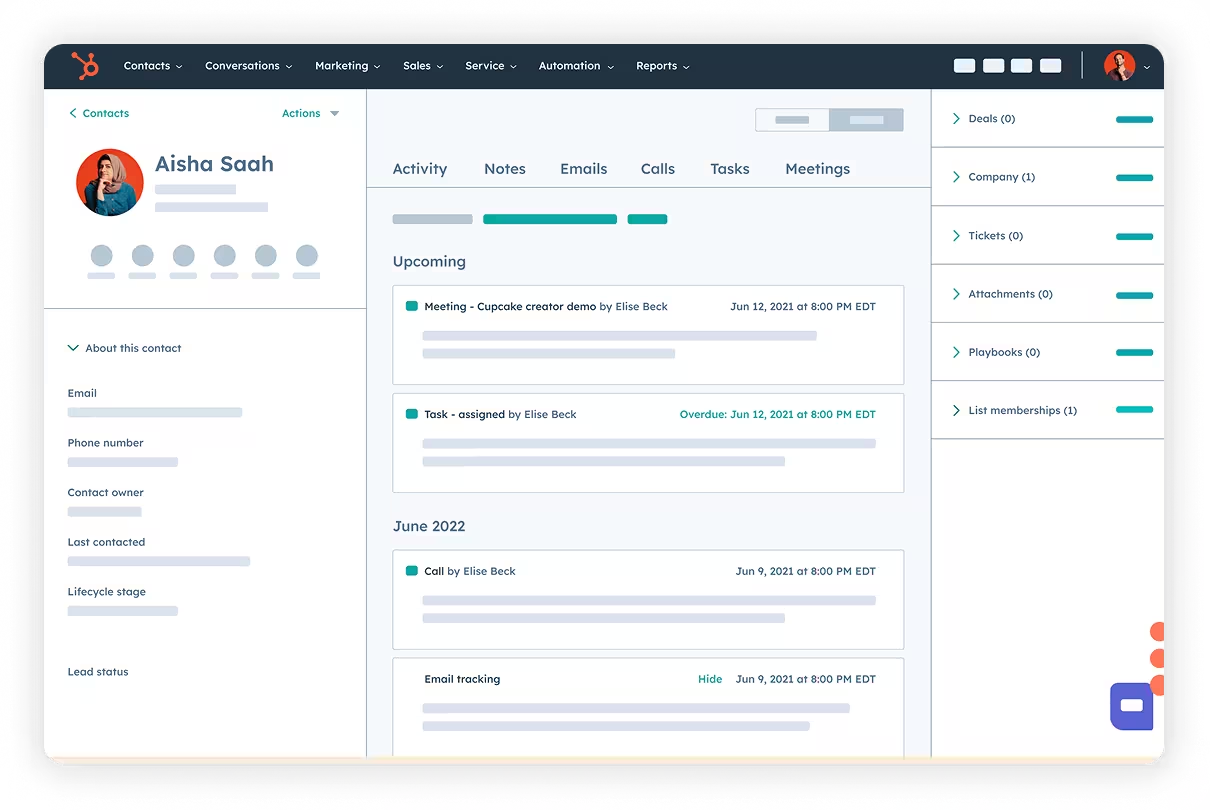
A customer lifecycle and communication tool built into the HubSpot CRM. It supports onboarding, education, tickets, surveys, and retention messaging.
Why it stands out:
All customer data and communication live in one system, which reduces friction.
Where it helps:
- Email and SMS lifecycle campaigns
- Customer surveys
- Support interactions
- Upsell messaging
Strong features:
- Unified customer data across marketing, sales, service, and success
- Automated email and SMS workflows for lifecycle communication
- Built-in ticketing, knowledge base, and support tools
- Customer surveys including NPS, CSAT, and feedback forms
- Upsell and renewal messaging triggered by CRM data
- Large integration ecosystem including Reachdesk, Influitive, and CS tools
Best fit: Teams already using HubSpot for marketing or sales.
5) Totango
What it is:
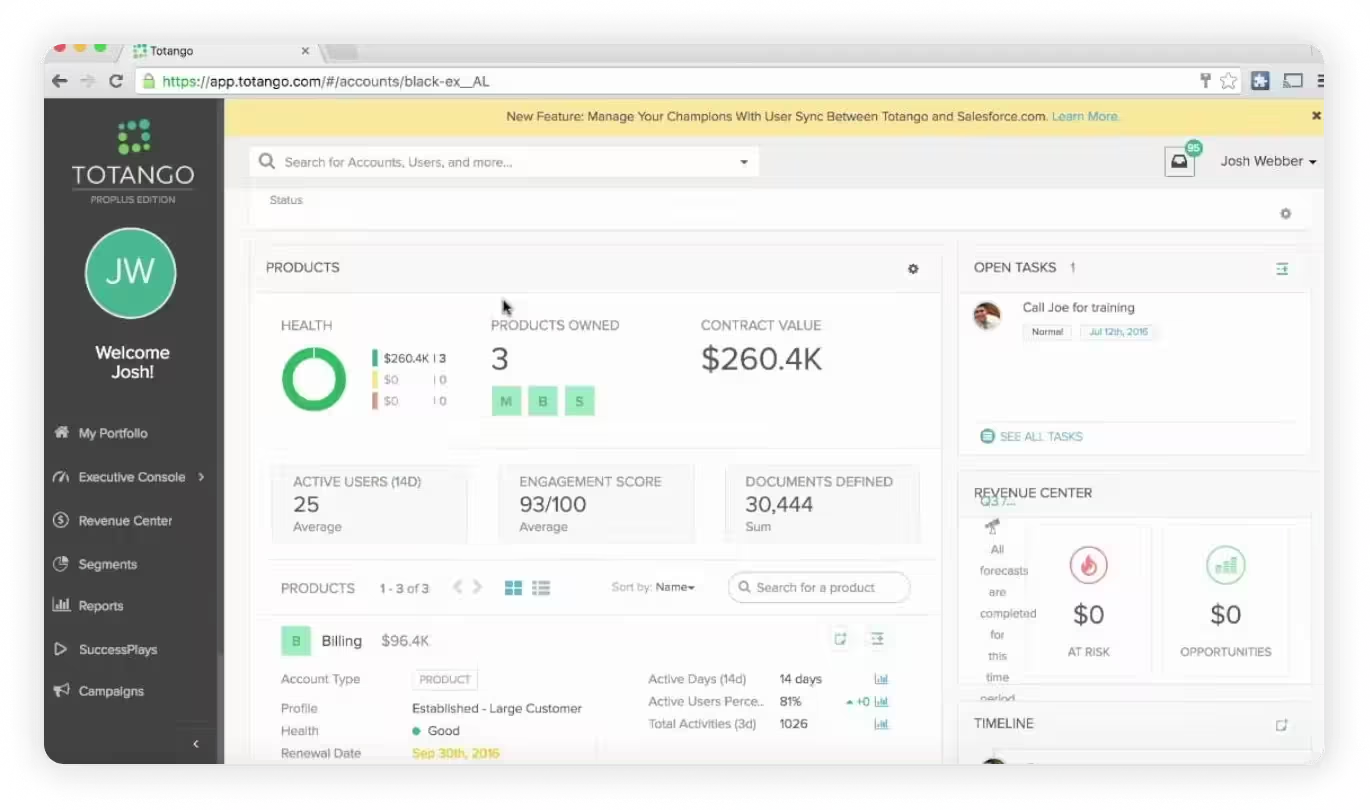
A modular customer success platform with ready to use blocks for onboarding, adoption, renewals, and expansion.
Why it stands out: It is fast to set up and does not require heavy technical resources.
Where it helps:
- Onboarding journeys
- Adoption campaigns
- Renewal preparation
- CS team workflows
Strong features:
- Modular SuccessBLOCs for onboarding, adoption, renewals, and expansion
- Pre-built journeys and templates for fast deployment
- Health scoring based on product usage and customer data
- Automated customer communications and alerts
- Flexible segmentation for targeted CS actions
- Integrations with CRMs, product analytics, and support tools
Best fit: Mid sized CS teams that want flexibility and speed.
6) Catalyst
What it is:
A modern customer success platform focused on clear data, simple workflows, and team adoption.
Why it stands out:
It blends product usage, CRM information, and support history into one clean view.
Where it helps:
- Renewal workflows
- Health scoring
- Playbooks for expansion
- CSM work management
Strong features:
- Unified customer profiles combining product, CRM, and support data
- Health scoring with transparent, easy-to-adjust logic
- Playbooks for renewals, expansion, and risk management
- Task and workflow management for CSMs
- Simple dashboards designed for day-to-day CS use
- Salesforce and product data integrations
Best fit:
Growing CS teams that need structure without heavy setup.
7) ChurnZero
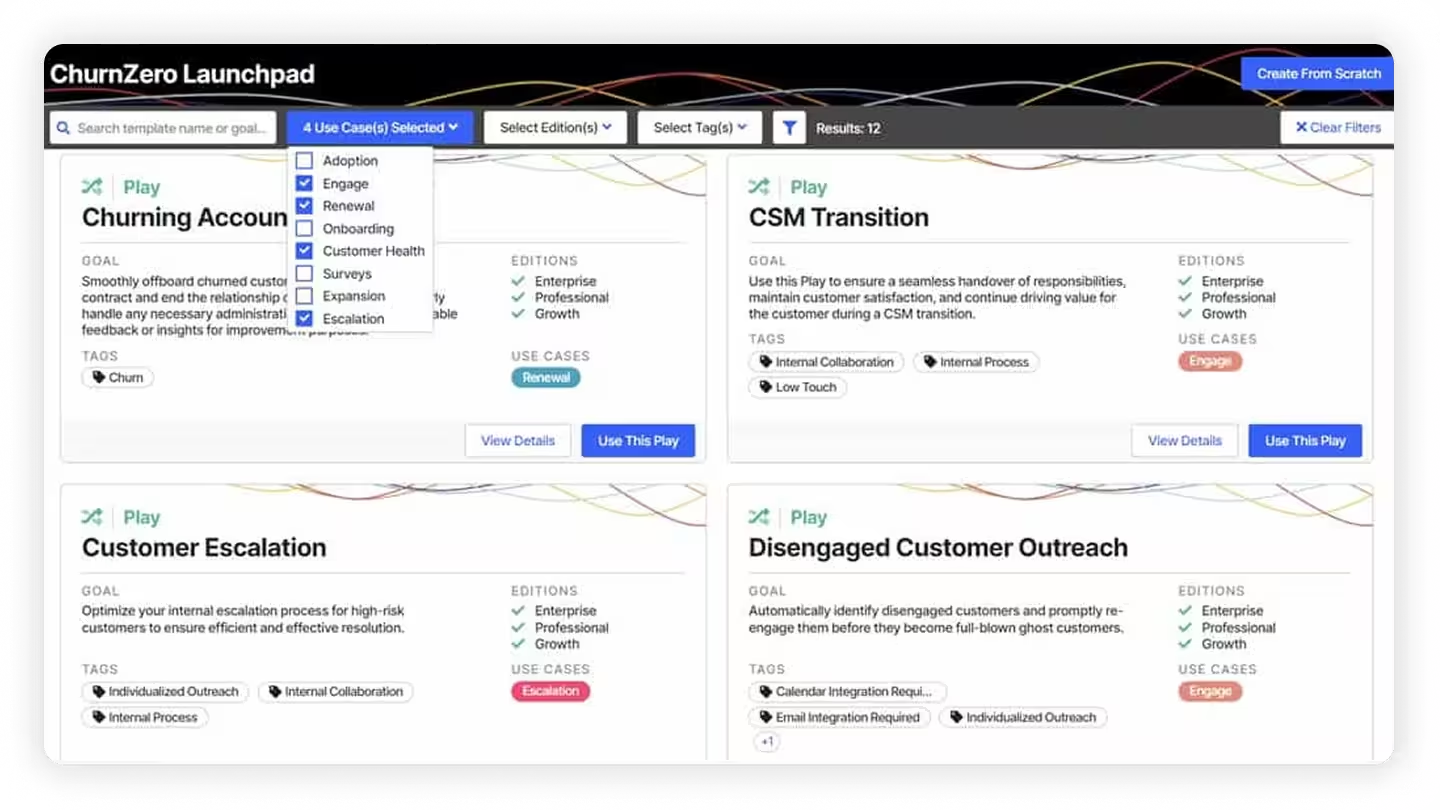
What it is:
A customer engagement tool that tracks product usage and sends targeted messages based on customer behavior.
Why it stands out:
Real time activity data helps teams respond quickly to risk or growth opportunities.
Where it helps:
- In app messages
- Renewal automation
- Behavior based outreach
- Segmented customer communication
Strong features:
- Real-time product usage tracking and segmentation
- Behavior-based email and in-app messaging
- Automated renewal and churn risk workflows
- Customer health scoring driven by live activity data
- Multi-channel communication from a single platform
- Reporting on engagement, retention, and expansion signals
Best fit: Subscription companies that rely heavily on usage signals.
8) SlapFive
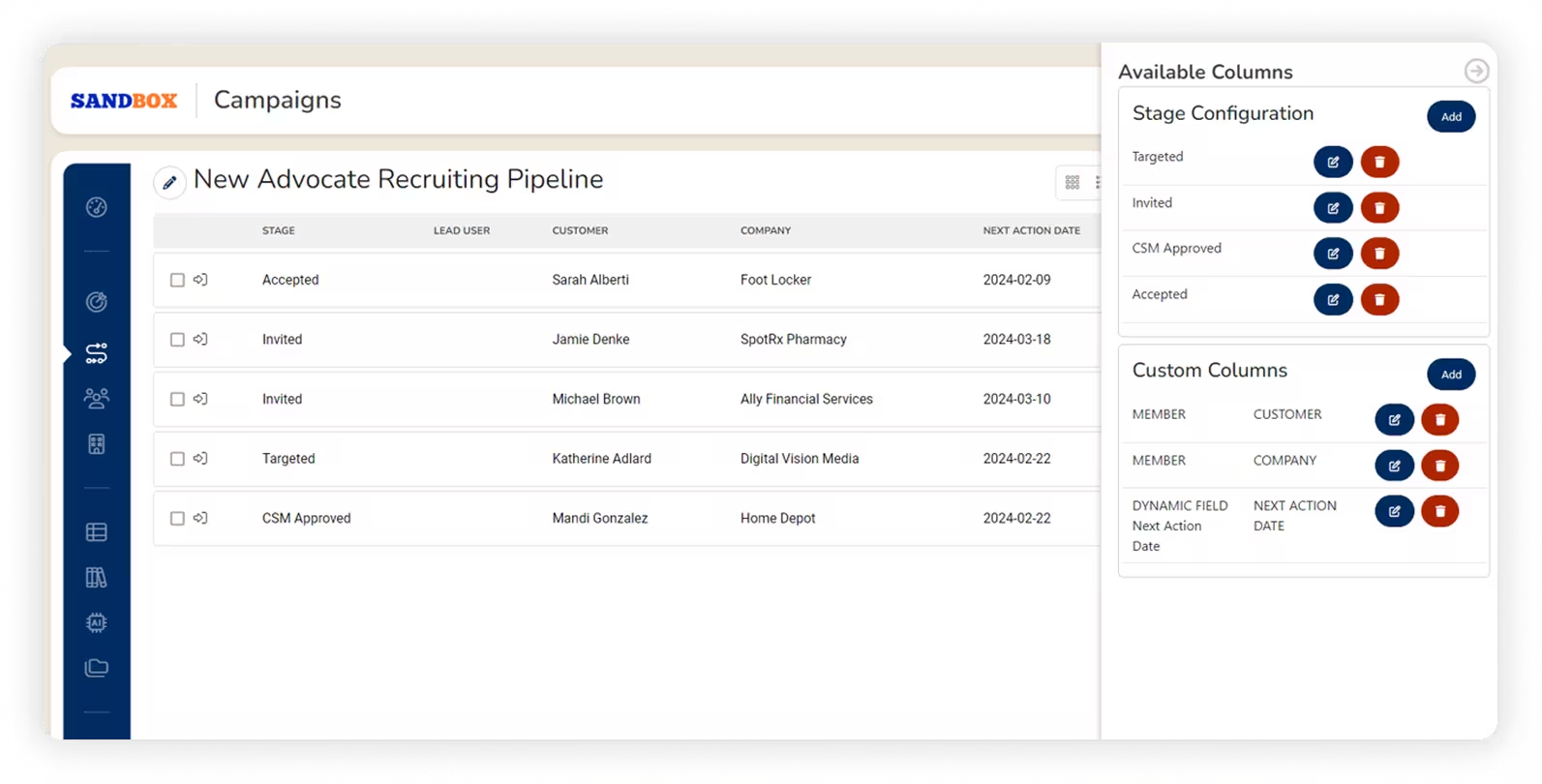
What it is:
A customer story platform that makes it easy to capture testimonials and share proof with sales and marketing.
Why it stands out:
It shortens the case study process and helps teams collect stories at scale.
Where it helps:
- Testimonial capture
- Video and quote submission
- Customer story libraries
Strong features:
- Guided workflows for capturing testimonials and stories
- Self-serve customer submissions for video and written proof
- Centralized customer story and reference library
- Salesforce integration for sales enablement
- Permissions and approval controls for customer content
- Analytics on proof usage and deal influence
Best fit:
B2B teams that need ongoing customer proof for GTM efforts.
9) UserEvidence
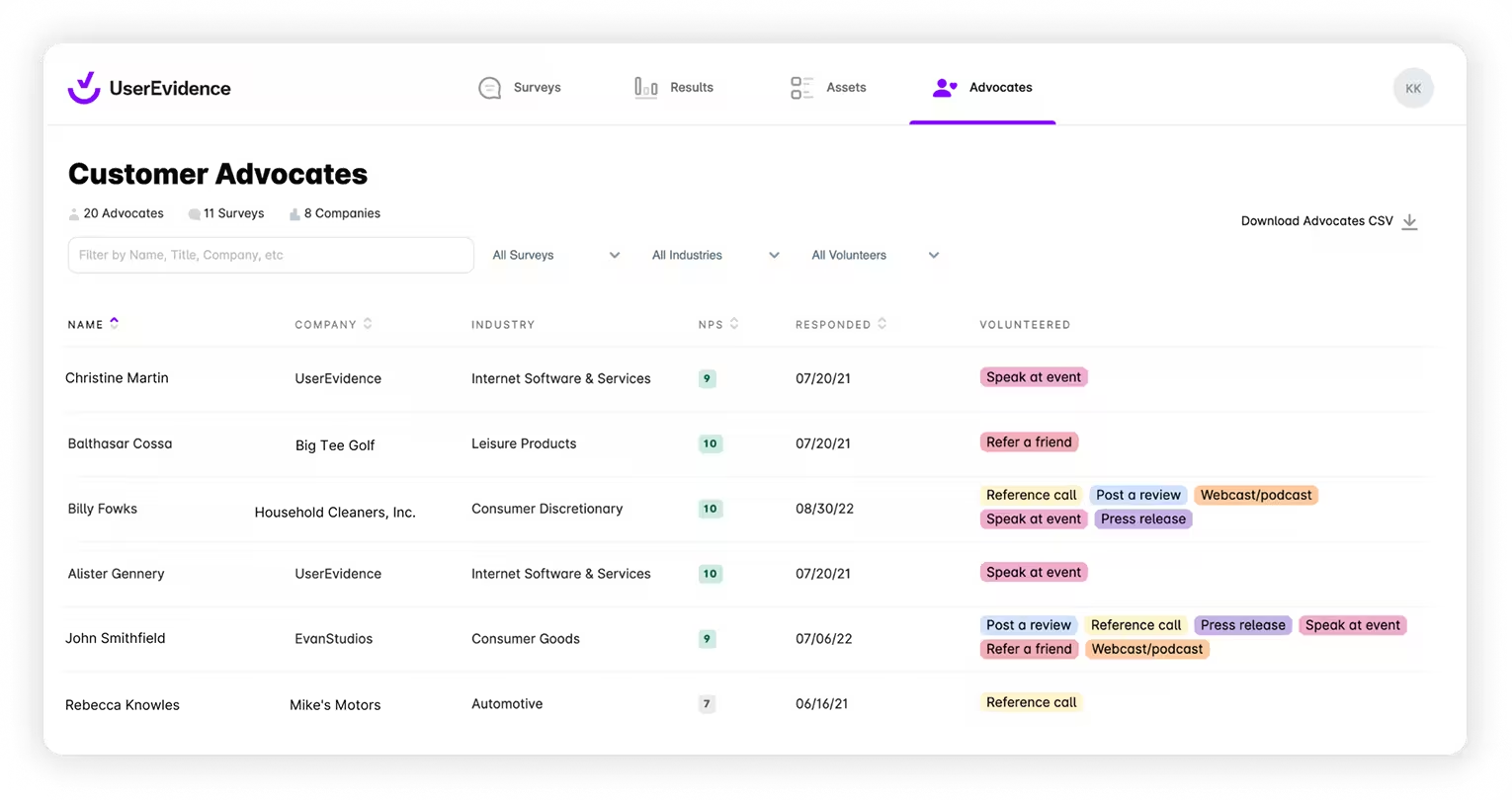
What it is:
A lightweight customer validation tool focused on quick surveys and ready to use proof assets.
Why it stands out:
It creates visual evidence cards and quotes without long approval cycles.
Where it helps:
- Short customer surveys
- Quote cards
- Customer proof pages
- Claim validation for campaigns
Strong features:
- Lightweight surveys designed for fast customer validation
- Auto-generated quote cards and proof visuals
- Customer evidence pages for campaigns and sales
- Claim validation tied to real customer responses
- Minimal setup with fast time to value
- Easy sharing across marketing, sales, and web channels
Best fit:
Marketing teams that want fast, scalable proof points.
10) LoopVOC

What it is:
A voice of customer platform that collects feedback, tags themes, and highlights sentiment trends.
Why it stands out:
It gives teams a simple way to understand what customers are saying across multiple channels.
Where it helps:
- Feedback analysis
- Message testing
- Customer sentiment tracking
- Product improvement insights
Strong features:
- Centralized collection of feedback from multiple sources
- AI-assisted tagging and theme analysis
- Sentiment tracking over time
- Message and positioning validation with real customer input
- Dashboards for product, marketing, and leadership teams
- Exportable insights for roadmap and campaign planning
Best fit:
Marketing and product teams that need structured customer input.
How to pick the right customer marketing platform in four simple steps
- Start with your customer goals: Retention, expansions, product adoption, and advocacy each require different levels of data, automation, and personalized communication. Choose tools that match the outcomes you want most.
- Map your lifecycle stages: Identify where customers need more support or more connection. For example, if onboarding feels flat or renewals stall, add Reachdesk to create personal moments that spark trust, appreciation, loyalty, and conversations.
- Protect your customer data: Decide which system holds the primary record for customer health, product usage, and communication. Clean, reliable data improves targeting, scoring, and reporting.
- Prove impact early: Pick two clear metrics such as retention rate, expansion revenue, time to value, or advocacy actions. Report progress every month so teams stay aligned and motivated.
Make your customer marketing unforgettable
Strong customer marketing relies on real connection. Reachdesk helps you create unforgettable moments across onboarding, renewals, expansions, and advocacy, with measurable impact tracked directly in your CRM.
If you already use HubSpot, Salesforce, Gainsight, or Catalyst, Reachdesk fits seamlessly into your workflow.
FAQ
1. What is customer marketing software?
Tools that help companies engage, educate, and grow existing customers through automation, communication, insights, and personalized programs. These tools support onboarding, adoption, renewals, and advocacy.
2. How does gifting fit into customer marketing?
Gifting adds a human moment to the customer journey. A thoughtful send can strengthen onboarding, celebrate milestones, reward advocacy, and support renewal conversations. Reachdesk makes this simple with global delivery, smart personalization, CRM and CS integrations, budget controls, and clear revenue reporting. This turns gifting into a measurable part of your retention and expansion strategy.
3. Can smaller teams run customer marketing programs?
Yes. Start with one or two stages of the lifecycle, such as onboarding and renewals. Add simple education flows, basic surveys, and a few well timed Reachdesk sends. Build from there once you see consistent results.


.avif)