

The best swag management platform for a revenue team ties a branded storefront to gifting, global fulfillment, and pipeline reporting, not just order processing. Eight platforms lead the category in 2026: Reachdesk, Sendoso, Postal, SwagUp, Printfection, Snappy, Brikl, and Swagopoly. Which one fits depends on your priorities: teams that need storefronts connected to gifting and pipeline data choose differently from teams that only need employees to order polos and mugs. Score each against budget control, personalization, fulfillment reach, reporting, and setup overhead.
Why swag management needs a branded storefront for revenue teams
Swag management is the operational workflow behind ordering, approving, personalizing, shipping, and tracking branded items across marketing, sales, customer success, and employee programs. Once requests start piling up for polos, hoodies, backpacks, and event kits, a branded storefront gives your team one place to control what gets ordered, who can order it, and where it ships.
That control matters. You need approval flows, budget guardrails, and regional fulfillment so swag doesn't turn into a spreadsheet headache. The best platforms also tie spend to outcomes: meetings booked, show rates, response rates, and pipeline influence. That's the real test, not just whether the merch looks good on a shelf.
Compare the top 8 branded storefront platforms
A quick note on fit: Brikl is built primarily for promotional product distributors and decorators running client stores, not for an in-house revenue team running its own program. Microstore tools like Swagopoly are solid for small businesses with a single always-on shop, but they don't offer the ABM, CRM, or pipeline-reporting layer that B2B revenue teams typically need. Keep that distinction in mind when a vendor's homepage says "swag store" without saying who it's built for.
Reachdesk Store Portals: When swag needs to work for the whole revenue team
Reachdesk Store Portals are branded, self-serve storefronts built on Shopify that give revenue teams one place to run event, brand, sales, and employee stores. Each store type connects to Reachdesk's swag sourcing, global fulfillment network, and pipeline reporting, so storefront spend ties to engagement and pipeline influence rather than sitting in a separate system.
- Use-case-built stores. Separate, purpose-configured portals for events, brand merchandise, and employee experience, each with its own catalog and branding. With multi-purpose options also available.
- Marketplace and sourcing. 8,500+ gifts and thousands of swag sourcing items available through Reachdesk’s global network, with both bulk and on-demand sourcing so teams aren't locked into one fulfillment model.
- Global fulfillment. Orders ship through Reachdesk's global fulfillment network, eliminating the need for a separate logistics provider. Store popular swag items in local warehouses across the US, UK, EU, Canada, and Australia, with international delivery to more than 180 countries.
- Flexible checkout. Points, credit card, or hybrid checkout options are available inside any store, configured to fit the audience rather than dictating how the store is built.
- Pipeline reporting. Store orders connect to the same reporting layer as Reachdesk's gifting programs, so spend ties back to engagement and pipeline influence rather than sitting in a separate system.
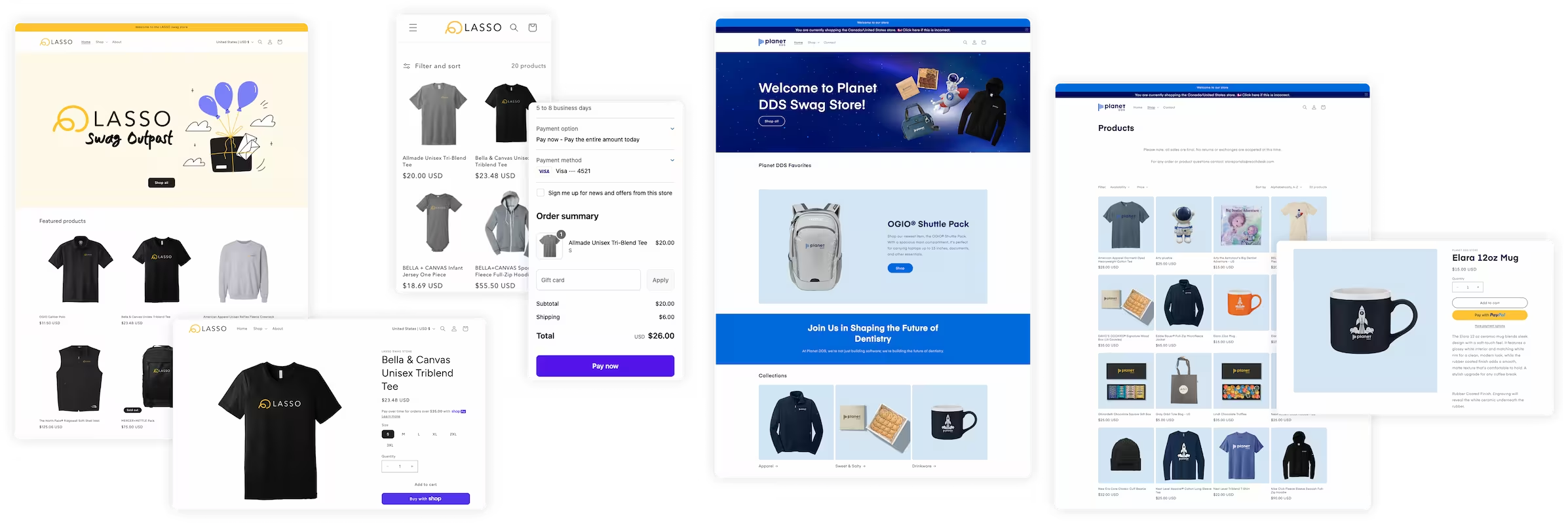
Reachdesk's customers like LASSO and Planet DDS put this to work in practice: LASSO uses Event Store Portal gift cards to drive booth traffic and reward on-the-spot demo bookings, while Planet DDS runs tiered gift cards for high-value event contacts and seasonal employee storefront credits. The results show up in the numbers too: 212% higher response rates with tangible gifts, nearly 7x pipeline ROI and a 93% gift claim rate for Planet DDS, and LASSO's gift claim rate climbing from 77% to over 80% year over year (Reachdesk customer data, 2026).
Sendoso Swag Store
Sendoso's Swag Store lets employees, customers, and prospects order from a customizable storefront, with Sendoso handling storage, packing, and shipping through Shopify and Magento integrations. While Sendoso supports international fulfillment from warehouses in the US, UK, EU, and Australia, much of its swag operation has historically been US-centric, with international orders often relying on cross-border shipping. Its 2026 acquisition of Merch.co (Sendoso, May 2026) expanded its sourcing capabilities through a network of US-based production partners, but organizations should confirm whether those capabilities are included in their plan, as international shipping and advanced fulfillment features are typically reserved for higher tiers. In contrast, Reachdesk was built around global sourcing and local fulfillment from the outset, with regional warehousing and supplier networks designed to reduce shipping costs, delivery times, and customs complexity across more than 180 countries.
Postal by Sendoso
Postal built its swag store management tools around self-serve, CRM-triggered gifting aimed at mid-market teams, letting reps trigger a swag send directly from a CRM record without routing it through a central admin. In May 2025, Sendoso acquired Postal, so the two brands now report to the same company, though Postal continues operating as its own product line with its own interface and support team. If you're comparing quotes from both, you're evaluating two product lines under one parent rather than two fully independent competitors, and it's worth asking each sales team directly how much product overlap or consolidation is planned.
SwagUp
SwagUp handles design, production, and global distribution through one dashboard, with inventory tracking and low-stock alerts built in. Its strength is the design-to-delivery workflow: teams that need help designing merchandise, not just distributing it, tend to lean on SwagUp for that creative layer. It works well if swag is your primary use case and you want that process handled in a single shop, but it doesn't extend into the broader ABM or pipeline-reporting territory that a full gifting platform covers, so it's better suited to teams who have already decided their swag program will stay separate from prospect or customer gifting.
Printfection
Printfection takes an inventory-first approach, giving teams a centralized "swag closet" with distribution rules that control who can order what and how much. It's built for companies that want to standardize an always-on swag program with tight control over stock levels and access, rather than run occasional storefront drops or event-specific stores. That inventory focus makes it a solid fit for HR and workplace teams managing a steady flow of onboarding kits, but it offers less in the way of the personalization, global gift options, or some basic CRM-tied reporting that a revenue team chasing pipeline outcomes usually needs.
Snappy
Snappy's model centers on recipient choice across four formats: On Demand, Bulk, Curated Kits, and Swag Store, all connected to its broader corporate gifting workflows. Letting the recipient pick their own gift from a curated set is the core differentiator here, and it extends into the swag store experience too, so an employee or prospect can choose their branded item rather than receiving a fixed one. It's a strong option for teams that want choice built into every send, though the platform is more gifting-first than storefront-first, so teams whose primary need is a dedicated, always-on branded shop may find the storefront experience secondary to Snappy's other formats.
Brikl
Brikl is built for promotional product distributors and decorators spinning up branded client stores fast, not for a single in-house revenue team. Its stores can go live in as little as 15 minutes with 12 fulfillment partners behind them, which makes sense for an agency running many client stores at once across different brands and needing rapid turnaround. That speed and multi-tenant design is the point: Brikl is optimized for volume across many stores, not for a single revenue team that wants one deeply integrated storefront tied to its own CRM and gifting data, so most B2B marketing or sales teams evaluating this list will find it's solving a different problem than theirs.
Swagopoly
Swagopoly is a print-on-demand microstore platform, run as a business unit of Praqtical Marketing Works, built for small and mid-sized businesses that want a branded shop without holding inventory. Orders are produced and drop-shipped within about 48 hours of purchase, with no minimum quantities and no warehousing required on the business's side, and a store can typically launch in under 30 minutes. That makes it a reasonable fit for a startup or small team that wants a single always-on merch shop for employees or customers. It's not built for B2B revenue teams running ABM or CRM-triggered gifting programs, though: there's no CRM integration, no pipeline reporting, and no gifting layer connecting storefront orders to sales or marketing outcomes, so a growing revenue team will likely outgrow it once swag needs to tie back to pipeline.
Storefront-only or full gifting platform: How do you know which you need?
Score any store front vendor you're evaluating against five factors: budget control, personalization depth, fulfillment reach, reporting, and setup overhead. Each one exposes a different way platforms tend to fall short.
- Approvals and budget controls. Look for spend limits by team, role, or cost center, not just a single shared budget.
- Personalization. Look beyond logo customization. The best swag platforms support custom merchandise, recipient choice, reward, payment, and hybrid transaction options, because meaningful personalization is what drives higher engagement and response rates.
- Global fulfillment. Check whether shipping is local in every region your team touches, or whether some regions route through cross-border shipping with added freight and delay.
- Reporting. Make sure orders can tie back to campaign, team, region, or buying group, and ultimately to pipeline, not just order status.
- Setup speed and admin overhead. Ask how much of the build, design, and integration work falls on your team versus the vendor before you sign anything.
How to choose the right platform for your team
The right swag store platform gives you budget control, real personalization beyond a logo swap, fulfillment that works in every region you sell into, and reporting that ties spend to pipeline, all without pushing most of the setup work onto your own team. Score every vendor you're evaluating against these five factors side by side, rather than comparing feature lists in isolation.
- Approvals and budget controls. Can you set spend limits by team, role, or cost center?
- Personalization. Does it go beyond a logo swap to names, notes, and recipient choice?
- Global fulfillment. Can it ship locally in every region your team touches, without added freight or delay?
- Reporting. Can you tie orders to campaign, team, region, or buying group, and ultimately to pipeline?
- Setup speed and admin overhead. How much of the build, design, and integration work falls on your team versus the vendor?
FAQ: swag management store fronts for revenue teams
What's the difference between a swag management platform and a corporate gifting platform?
A swag management platform focuses on ordering, inventory, and distribution of branded merchandise, and that's usually where its job ends. A corporate gifting platform, like Reachdesk, adds personalized gift selection, global vendor sourcing, and reporting tied to business outcomes like meetings booked or pipeline influence. In practice, that means a swag management platform can tell you what shipped and to whom, while a gifting platform can also tell you whether that send moved a deal forward, which matters more the closer your program sits to revenue.
Do I need a branded storefront if I already send one-off gifts?
Storefronts and one-off sends solve different problems, so the answer depends on how your program actually runs day to day. A storefront works best for ongoing, self-serve needs like employee onboarding or an always-on merch shop, where the same catalog needs to be available every day without anyone manually approving each order. One-off, triggered gifting works better for timed touchpoints like a pre-demo thank-you or a deal-close celebration, where personalization and timing matter more than self-serve access. The strongest programs use both from the same platform, so reporting stays unified instead of split across two systems.
How long does it take to launch a branded storefront?
A fully branded, custom-built storefront with dedicated design and project management support typically launches within a few weeks rather than months. Timelines shift depending on how much custom branding, catalog curation, and approval-flow setup your team needs before launch, so a simple single-audience store will move faster than one serving employees, customers, and event attendees separately. Vendors like Reachdesk that assign a dedicated project manager, rather than a self-serve setup wizard, tend to hit these timelines more reliably.
Can one storefront support employees, customers, and event attendees?
Yes, but check whether the platform lets you tailor the experience for different use cases or simply offers one generic storefront for everyone. Reachdesk's Store Portals are built around three transaction models, Reward, Payment, and Hybrid, and each can be configured for specific use cases such as employee rewards, customer gifting, sales, partner programs, or events. This allows teams to run multiple branded stores with their own catalogs, permissions, and budgets from a single account, rather than forcing every audience through the same shopping experience. It also keeps reporting cleaner by separating spend and engagement by program, making it easier to measure the performance of each initiative independently.
Ready to simplify swag management globally?
Whether you're replacing spreadsheets, consolidating vendors, or looking for a storefront that connects swag to pipeline, Reachdesk gives revenue teams one platform for sourcing, branded storefronts, global fulfillment, gifting, and reporting.
Book a demo to see how Reachdesk helps marketing, sales, customer success, and events teams manage swag at scale from a single platform.

.avif)