
If your deals keep stalling after a great first call, the problem probably isn't your champion. It's everyone your champion has to convince after you hang up.
83% of the B2B buying journey now happens without a vendor in the room. Any single vendor gets around 5% of a buyer's time. The number of interactions shaping a typical purchase has climbed from 17 to 27 in just two years. And 75% of purchases now have an executive as the primary decision maker, up from 58% in 2017.
Put those numbers together and the picture is clear. You are not selling to a person anymore. You are selling to a group, and most go-to-market motions were never built for that.
A B2B buying group, also called a buying committee, is the full set of stakeholders who research, evaluate, and approve a purchase together: end users, functional owners, budget holders, and executive sponsors. Engaging that group means reaching each of them with something relevant to their role, rather than routing everything through one champion and hoping it lands.
This guide pulls from episode 2 of The Pattern Break, where we sat down with three senior marketing leaders to unpack how B2B buying groups actually work, why single-threaded engagement quietly kills pipeline, and what it takes to move a whole group toward yes. Here's what Molly Evola, Senior Content Marketing Manager at customer.io, Mark Kilens, VP of Marketing at EasyLlama, and Jess Cook, VP of Marketing at Vector, had to say.
The hidden cost of single-threaded buyer engagement
Most go-to-market teams still operate the same way: find a champion, work that one relationship, win them over, and hope they sell internally for you.
The problem is that a champion is one voice in a room full of competing priorities. As the panel put it, a single enthusiastic contact can give you a false signal that the whole organization is on board, when really you're looking at one person's excitement rather than the group's. That gap tends to surface late in a deal, often too late to recover from.
Single-threaded relationships create structural risk in a few specific ways. If your one contact goes out of office, the deal stalls. If they stop responding, momentum dies with them. And if they change roles or leave the company mid-cycle, which happens more often than anyone would like, you can lose months of progress overnight. A strong champion is valuable, but a champion alone is not a strategy.
The fix isn't complicated in theory: build more than one strong relationship inside every meaningful account, what sales teams call multi-threading, and get the full B2B buying group, or buying committee, involved as early as possible. The hard part is doing it without creating internal friction, which the panel addressed directly.
Keeping outreach visible as a group activity, rather than something that happens behind a champion's back, helps stakeholders feel included instead of bypassed. Matching seniority also matters. Having executives reach out to executives and individual contributors reach out to individual contributors keeps the conversation feeling like peer to peer, not vendor to committee.
Introducing the G.I.F.T framework for engaging buying groups
To move from single-threaded outreach to true buying group engagement, the session introduced a four-part framework: G.I.F.T.
- Group mapping comes first. Before any outreach goes out, identify the six to eight stakeholders typically involved in a decision.
- Insight alignment follows, pairing every touchpoint, gift included, with content relevant to that specific person's role and concerns.
- Format matching means aligning what you send to where each stakeholder sits in the buying journey, since a first-touch gesture and a late-stage thank-you call for very different approaches.
- Timing closes the loop: reaching people when they're actually ready to engage, not just when it's convenient for your quarter.
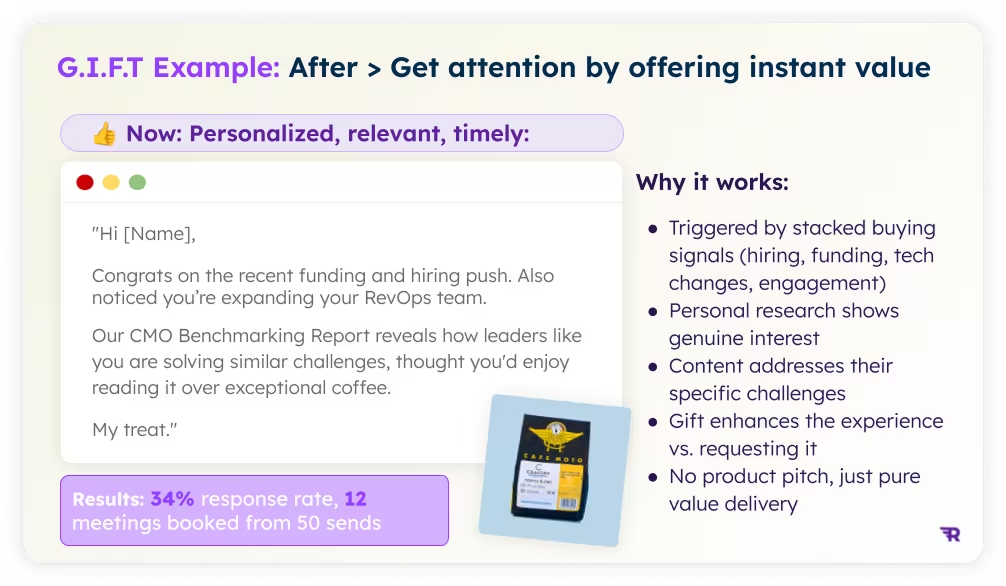
The difference this makes shows up starkly in the data shared during the session. A generic, ungifted outreach play (think a generic gift card and a bare "can we chat") produced a 2.3% response rate. The same effort, redesigned around real signals such as hiring changes, funding news, or engagement data, paired with content tied to a specific challenge and a gift that adds genuine value, produced a 34% response rate. Same budget, completely different outcome, because the second version treats gifting as one part of a coordinated, insight-led motion rather than a stand-alone tactic.
This is also where gifting proves its worth across the entire funnel, not just at the top. As the panel discussed, thoughtful gifting can re-engage an account that's gone quiet, create urgency when a deal is moving slowly, or strengthen your position when a competitor is edging into the conversation. The gift itself matters less than the moment you choose to send it and the specific person it's meant for.
3 ways leading teams are engaging buying groups in practice
The panel shared how their own teams put these principles into action. Here are three approaches worth borrowing.
1. How customer.io personalizes gifting across an entire buying group
Molly's team treats ABM and gifting as a lifecycle motion: the right message, to the right person, at the right moment, powered by as much data as they can gather. Reps pull together intent signals, call notes, web and email engagement, and information on funding or hiring changes, then fill in any gaps directly. From there, the team identifies specific triggers, like a deal that's gone quiet or one that needs a push, and matches a personalized gift to that moment for each person in the buying group.
The results reflect genuinely individual details rather than generic tokens. One buyer preparing for a trip received an airline gift card timed to their trip planning. Another, whose child loved marine life, received tickets to their local aquarium. Neither gift was expensive or elaborate. Both were specific enough to feel like the sender had actually been paying attention, which is the entire point.

2. How Vector uses contact-level ads to reach every stakeholder in a deal
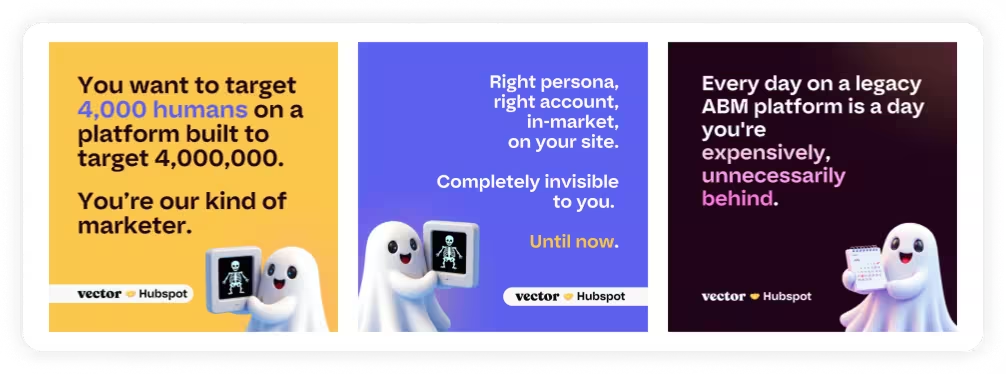
Jess's team at Vector takes a different route to the same goal: making sure every stakeholder in a buying group sees messaging built for their specific role, not a one-size-fits-all account-level ad.
The process starts by moving audience creation outside native ad platforms and into contact-level targeting, so messaging reaches the exact individuals involved in a deal rather than an entire company and hoping the right people notice. From there, the team uses AI to scrape recent discovery calls for recurring pain points, mapping specific language and concerns to specific titles. A demand gen user, an operations stakeholder, and a VP each see creative built around what actually matters to their role, using the real words those buyers already use to describe their problems.
The impact shows up in both engagement and internal alignment. Click-through rates have landed in the 6 to 8% range, well above typical benchmarks, and because every stakeholder has already seen relevant messaging by the time a deal reaches leadership, buy-in moves faster. A CMO already recognizes the brand by the time their demand gen manager brings it to them.
3. How EasyLlama times gifting to match the sales cycle
Mark's team builds gifting into the full arc of a deal, not just the first touch. Early in a relationship, before the team knows much about a prospect, gifts stay simple and low-pressure, something like a coffee gesture tied to a first conversation. As reps learn more on discovery calls, whether it's a shared interest, a family detail, or a specific concern, that information gets logged and used to personalize later touchpoints.
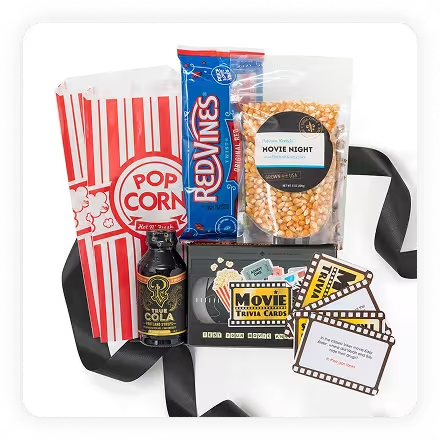
One standout example: when a deal enters a long evaluation period, reps have sent a "movie night" gift, popcorn, candy, and a streaming credit, timed to a stretch when a deal risks going cold. The team also tracks every gift's purpose directly in the CRM, tagging the specific use case behind each send. That data lets the team see which moments and messages actually correlate with stronger win rates, without ever claiming gifting alone closed the deal.
The panel was clear on measurement here too. Rather than chasing a direct cause and effect between a single gift and a closed deal, the better approach is comparing win rates, average deal size, and deal length across gifted and non-gifted opportunities of similar size and segment. Used this way, gifting becomes a data-backed part of the sales motion rather than a hopeful gesture.
Why buying group engagement should shape your GTM strategy
Across every example the panel shared, one theme kept surfacing: winning a B2B buying group requires making every stakeholder feel seen, not just the one who happens to answer your emails.
That means mapping the real group behind a deal before outreach begins, not after a champion goes quiet. It means pairing every touchpoint, gifting included, with insight specific to that person's role and moment in the journey. And it means treating marketing and sales as one coordinated team, since disjointed outreach across departments is often what tips a promising deal into a stalled one.
Gifting alone will not win a deal. But timed well and grounded in real signals, it becomes one of the clearest ways to make a group of stakeholders feel like a vendor actually understands their business, not just their job title.
Want to see what modern buying-group engagement actually looks like?
The full Pattern Break series brings together leading B2B marketers to unpack what's actually driving pipeline today, from buyer engagement and AI to relationship-building, gifting, and modern outreach strategies. You can watch Episode 2 here or explore the rest of the series now.
The common thread? The GTM teams winning today are engaging entire buying groups with the same care they once reserved for a single champion. At Reachdesk, we help B2B go-to-market teams create those moments through gifting, direct mail, custom swag, and experiences that turn individual outreach into coordinated buying-group engagement. You can see how it works by booking a demo with our team here.
Buying group engagement FAQs
What is a B2B buying group?
A B2B buying group is the full set of stakeholders, typically six to eight people, who influence a purchase decision, spanning end users, budget holders, and executive sponsors. Modern B2B deals are rarely decided by a single champion acting alone.
Why does single-threaded engagement hurt B2B pipeline?
Relying on one champion creates a single point of failure. If that person goes quiet, changes roles, or gets overruled internally, the deal stalls with no other relationship in the account to fall back on.
What is the G.I.F.T framework?
G.I.F.T stands for group mapping, insight alignment, format matching, and timing. It's a framework for coordinating outreach, content, and gifting across an entire B2B buying group rather than a single contact.
How does gifting support buying group engagement?
When gifting is personalized to the individual and timed to a real moment in the deal, such as re-engaging a quiet account or building momentum during a long evaluation, it helps every stakeholder feel recognized rather than marketed to.
What is multi-threading in B2B sales?
Multi-threading means building relationships with multiple stakeholders within an account rather than working through a single champion. It reduces the risk of a deal stalling if that contact goes quiet, changes roles, or is overruled, and it means more of the buying committee has already formed an opinion by the time a decision is made.